
Last updated on February 9th, 2025 by Kenneth Ojeisekhoba
OXERBLOG > BLOG > HOW TO CHOOSE A GOOD DOMAIN NAME
Disclosure: Oxerblog relies on its readers’ support through referral links. I may earn a small commission for some of these links, at no additional cost to you.
Selecting the right domain name at the outset is essential for launching a successful blog or website.
Your domain name plays a crucial role in defining the tone of your website and greatly impacts your online presence and branding.
Many people find it challenging to come up with a good domain name because it seems like all the catchy options are already taken.
As a result, individuals sometimes end up paying hundreds or even thousands of dollars for premium domain names.
However, you don’t have to break the bank to secure an excellent domain name.
In this guide, you’ll uncover 18 valuable tips and tools to help you select a domain name that not only sparks interest but also boosts traffic to your site.
With that, here is a list of 18 useful tips and tools for brainstorming possible domain names for your website.
Table of Contents
1. Choose a domain name that can market your brand
2. Pick a name that is flexible and all-inclusive
3. Add your main keyword(s) to your domain
4. Choose a name that’s easy to pronounce and spell
5. Keep your domain name short and simple
6. Make your domain name unique and catchy
7. Choose a popular domain name extension
8. Avoid words with double or triple letters
9. Avoid using numbers to represent words
10. Use domain name generators to brainstorm ideas
11. Do a thorough trademark search for your domain name
12. If you find a name you like, register it immediately
13. Register alternative TLDs to protect your brand
14. Never include hyphens in your domains
15. Research if your domain has been used before
16. Purchase your domain name from a good registrar
17. Popular registrars where you can buy domain names
18. Register your domain name for free (with discounted web hosting)
▪ Frequently asked questions (FAQs)
Let’s set the ball rolling.
18 Tips (and Tools) to Choose the Right Domain Name
1. Choose a Domain Name That Can Market Your Brand
To thrive in the online world, your website must effectively draw the right people.
Your target audience has numerous options, so you have a few seconds to catch their attention.
One of the first ways visitors will engage with your site is through your domain name.
So, choosing a domain name that accurately represents and enhances your brand is essential.
Also, selecting the right domain is crucial for effectively making a lasting impression and connecting with your audience.
It should clearly convey the essence of your site, highlighting its value and the audience it serves.
That way, you eliminate confusion and effectively communicate your site’s focus to potential searchers.
For example, you can choose a domain name that reflects your brand, niche, or industry.
Where possible, direct your domain name toward your target demographic or region – that is the city or country you are aiming to reach.
Overall, choose a domain name that complements your title links in search results and encourages users to click on your result.
2. Select a Domain Name that is Flexible and All-Inclusive
Your domain name should reflect your brand and communicate your goals clearly.
When coming up with business name ideas for your website, consider what you are currently offering and the potential expansions you envision for the future.
In other words, select a name that is flexible and inclusive, rather than overly specific.
For example, instead of “shirtsformen”, though you want to sell only shirts for now, you can choose a domain name like “mensclothing”.
So, if you decide to sell other men’s clothing later, your domain covers that already from the start.
The idea is all potential customers should be able to tell what they will find in your clothing store through your domain name.
So, no buyer is excluded due to a limited domain name.
In other words, your domain should accommodate the products and services you plan to offer long-term.
So from the get-go, select a domain name that allows for growth within your industry or niche.
3. Add Your Main Keyword(s) to Your Domain Name
One of the quickest ways to generate domain name ideas is by including your main keyword(s).
That way, users and search engines can easily recognize what your site is all about.
While having a keyword in your domain may not improve your SEO ranking, it can still serve as a relevancy signal.
So your keyword-rich domain can complement your high-quality content and well-optimized pages when your site ranks in search results.
This can impact your organic click-through rate (CTR) and attract more relevant users to your site.
No wonder keyword-based domains are among the most expensive in the market. They are called premium domains and are regarded as online real estate.
With a little ingenuity, you can blend your main keyword(s) and other related words to coin a new portmanteau word that can serve as your domain name.
For example, “medicare” is a merger word from the keywords “medical” and “care”.
4. Choose a Name that is Easy to Pronounce and Spell
Your domain name shouldn’t be a tongue-twister or difficult to spell, even if it is a blended word.
Many users will discover your blog through the word-of-mouth buzz.
So choose a domain name that anyone can easily pronounce and type when they share it with others.
Also, as much as you can, avoid words with silent consonants that make pronunciation and spelling challenging.
Remember that your visitors will originate from various parts of the world.
If your domain is hard to say and type, people will misspell it, which can affect your traffic.
So, when coining a domain name for your website, think globally even if you have a local focus.
5. Keep Your Domain Name Short and Simple
Another good practice is to make your domain as short and simple as possible.
Popular domain name registrars like GoDaddy recommend that your domain length should be less than 15 characters. Because the shorter, the more memorable.
In other words, short domain names are easier to remember and are more likely to drive traffic to your website than long ones.
It is no accident that the average domain length is 6 characters for the top 50 websites and 9.5 for the top 250,000 sites.

The chances of users forgetting or misspelling a short and simple domain name are almost nil. For example, “cars.com”.
Also, short and simple domains are a lot easier to share with others.
That’s why they cost way more than most in domain marketplaces.
On the other hand, long names can be a turn-off for some potential visitors.
6. Make Your Domain Name Unique and Catchy
Unlike human beings, no two blogs can share identical or very similar domain names.
Even if your domain name includes popular keywords, you can still make it unique and catchy to stand out from the competition.
It should be a never-seen-before name that is modern, instantly appealing, and memorable.
Additionally, the name should align with your business type and be one that can evolve with your brand.
Most importantly, it should resonate with your target audience.
Your domain name shouldn’t be derivative, but unique, especially with common keywords.
So, check other websites in your niche to avoid duplicating names.
Then, come up with original domain name ideas from which you can now pick what you think is the best.
7. Use a Popular Domain Name Ending
A domain name ending (aka top–level domain (TLD) or domain extension) is the dot symbol and the two or more letters − sometimes a word − you add to your site name to create your domain name.
For example, “.io”, “.fm”, “.edu”, “.com”, “.blog”, “.photography”, etc.
First, Google treats all domain extensions as generic top-level domains (gTLDs), except those listed by ICANN as country-code top-level domains (ccTLDs).
According to Google, ccTLDs “are a strong signal to both users and search engines that your site is explicitly intended for a certain country”.
When you use a country code top-level domain (ccTLD), you limit your global reach.
That said, Google also treats some ccTLDs as generic top-level domains because users and site owners see them as more generic than country-targeted.
So, unless you’re targeting a particular geographical location, it doesn’t really matter which extension you use for your domain name.
Having said all that, it is still best to use a popular generic top-level domain, preferably the “.com” ending.
Because, despite the growing popularity of different new endings, dotcom remains the most dominant and popular extension globally.
Globally, as of December 2023, it accounted for about 46% of all generic top-level domains (gTLDs) (Statista).

our findings
At least 6 of the top 10 sites in organic SERP have a “.com” ending.
To confirm this fact, you only need to check the TLDs of websites on any first page of global search results.
That said, Google has said that domain extensions only matter somewhat if you’re targetting a specific region.
So, while you will improve your page rankings in your target region with a ccTLD ending, your chances of ranking in global search results are greatly reduced.
Many internet users around the globe assume that every domain name ends with “.com” and will instinctively type it 9 out of 10 times.
While “.com” domains aren’t readily available, it is still best to coin a name with the most popular extension.
8. Avoid Using Words with Double or Triple Letters
Words with double or triple letters are frequently misspelled.
Many people often leave out a letter, no matter how many times they’ve spelled it before. For example, ‘balloon’ is often spelled ‘baloon’.
Even popular words like ‘success’. People would either leave out a ‘c’, or an ‘s’.
So, domain names with double or triple letters are very prone to typos.
If, for example, you want to start a blog that targets millennials and you create a domain name like ‘millennialtop.com’, users will spell it wrongly. Either they leave out an ‘l’ or ‘n’.
Similar concerns apply to domain names with triple letters. For example, if your domain name is a portmanteau like ‘successstorypro.com’, many people may struggle to spell it correctly.
So you’ll only be sending traffic to your competitors’ sites.
The alternative, however, is to do what other websites do.
If they’re available, you can register as many typos as possible, and point them to your website.
This way, when any visitor mistypes your domain name, they will still land on your site.
It will cost you a lot more money though; but compared to what you stand to gain, it is worth it.
9. Avoid Using Numbers to Represent Words in Your Domain
Sometimes, people use numbers in place of words, such as ‘2’ to mean ‘two’ or ‘5’ to represent ‘five.’
While this practice isn’t prohibited, it’s generally best to avoid using numbers in your domain name.
For example, using ‘4’ to represent ‘for’ or ‘2’ for ‘to’ or ‘too’ can create confusion.
Consider a tailoring business named “7piecesuit.com.” When people hear this domain, they might assume the number represents a word unless it is explicitly explained to them.
As a result, communicating your domain verbally becomes cumbersome.
Other examples: If your domain is “field4rent.com” or “bookshops2let.com,” you’ll have to spend extra time and effort clarifying how to spell it correctly.
Such domain names can burden people’s memory. Users must always remember that it’s the digit ‘4’ and not the word ‘for,’ ‘7’ instead of ‘seven’, or the number ‘2’ represents the word ‘to’.
Therefore, it’s advisable to steer clear of numbers in your domain name, as this confusion could inadvertently direct traffic to a competitor’s website.
10. Use Domain Name Generators to Brainstorm Ideas
Despite the number of registered domain names globally – 628+ million – you can still find the perfect domain for your website.
The easiest and quickest way to coin fresh ideas is to use free tools known as ‘domain name generators’.
There are many of them on the Internet, but the popular ones include Domain.com, Nameboy.com, and DomainWheel.com.


Simply enter the keywords you want to incorporate in your domain name into the field of a domain name generator, and it will instantly bring up dozens of suggestions.
Next, you don’t want to get hung up on having a particular keyword in your domain if you can’t use it to coin a brandable name.
Be open-minded about other possible alternatives.
There are so many keywords in your niche that you can work with.
Once you find new keywords, throw them in and see what fresh ideas these name generators will produce.
Like GoDaddy would say, this could be the start of something big.

11. Do a Thorough Trademark Search for Your Domain Name
Before you purchase a domain, do a comprehensive search to make sure it isn’t a match for another company’s brand name or trademark.
This step is needed to avoid trademark infringement.
In many countries, it is prohibited to register a name that is identical or similar to someone else’s intellectual property. This practice is known as cybersquatting.
If you proceed, it may result in a legal challenge. And legal fees can be costly.
You also risk losing the domain name.
It isn’t allowed even when you reside in different countries, as the Internet is considered one big community.
The trademark owners will either contact you and request you turn over the domain, or file a cybersquatting complaint under the Uniform Domain Name Dispute Resolution Policy (UDRP).
So, to avoid unnecessary conflicts, do thorough online research on Trademark247, and ensure that you do not accidentally register another company’s trademark.
Your search should be for matching and similar names (with variant spellings).
Having said that, generic premium domains like “business.com”, “furniture.com”, etc. can never be trademarks.
So, you are free to coin domain names from any generic term.
12. If You Find Any Name You Like, Register It Immediately
Brandable domain names are big business these days.
They are highly sought after by speculators because they sell like hotcakes.
That’s why some people nicknamed them “online real estate”.
So, if a unique name you like is available, register it fast or you’ll find out someone has beaten you to it.
These are the kinds of domain names speculators target.
They buy them cheaply and then, after a while, resell them at a premium.
If you want to buy it later from a speculator, you’ll pay through the nose.
So it is better to register a new domain immediately if it is available than to purchase it later from an intermediary.
13. Register Alternative gTLDs (and Different Spelling Versions) to Protect Your Brand
Websites with the same or similar domain names but different extensions are considered different sites. It is legitimate.
For example, WordPress.org is totally different from WordPress.com.
Same thing. If your main domain is “abzmc.com” and other people register “abczm.net”, “abczm.org”, “abczm.co”, “abczm.blog”, etc., it won’t generate any issues.
So, you can protect your domain and brand by registering other popular gTLDs before someone else does.
It is common practice for businesses to purchase matching and similar names with other popular extensions, including common domain misspellings, with the same .com extension.
All these domains are referred to as secondary or parked domains.
You should also consider registering words spelled differently in North American English (NAmE) and British English (BE). For example, the word ‘center’ in NAmE is spelled ‘centre’ in BE.
Another example: the word “practice” in NAmE is “practise” in BE.
Both spellings are acceptable in grammar. However, a user will spell the version they’re familiar with.
Once you register these parked domains, point them to the same IP address as your primary domain, to send traffic to your site.
So, when a user mistype your main domain or spells a version they’re used to, they’ll still land on your website.
You can register as many domains as you want, and point them to your site.
This approach allows you to protect your main domain while also increasing your traffic.
You will also avoid the stress of legal disputes with copycats.
14. Never Include Hyphens in Your Domains
Hyphens in domains are a big no-no if you really want to succeed online.
Whether in your main domain or your parked domains, avoid hyphens completely.
First, domain names created with hyphens have a bad reputation as spam domains.
Generally, people view hyphenated domains with suspicion. So they ignore links to these domain names for fear of landing on a scam site.
That’s why using hyphens in your domains may negatively impact your brand’s credibility and originality.
Second, users don’t usually expect domains to have hyphens, so they hardly remember to include them when typing a domain name.
You will only drive traffic to your competitor’s website whose domain name is the same spelling as yours (without a hyphen).
Third, it is difficult to verbally communicate non-verbal symbols such as hyphens when sharing your domain in person.
It will strike a vacuum in the hearer’s mind.
People include hyphens in domains to differentiate theirs from an existing popular domain.
This may even lead to legal and trademark issues.
15. Research If Your Domain Name Has Been Used Before
Sometimes, a domain name may be available because it has expired, not because it is new.
Someone might have used and abandoned it. So, such a domain name may have a history.
It is advisable, therefore, to find out what its records are before you commit to purchasing it.
You’re in luck if it was just registered but never used, and left to expire.
But if the history is negative, you don’t want to be tied to such.
You can find out about its past through Google Search and other free research tools such as ICANN Lookup and Wayback Machine.
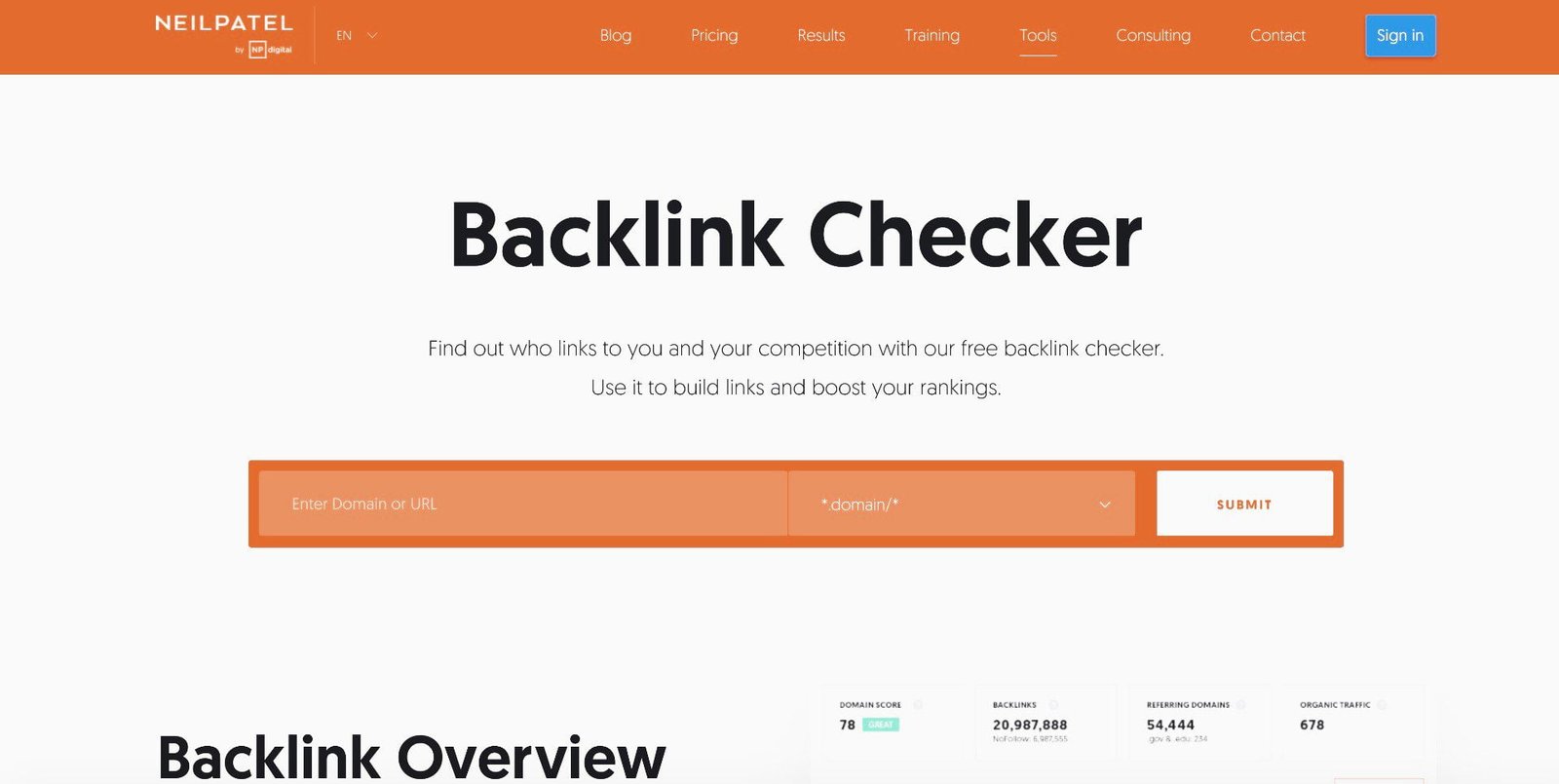
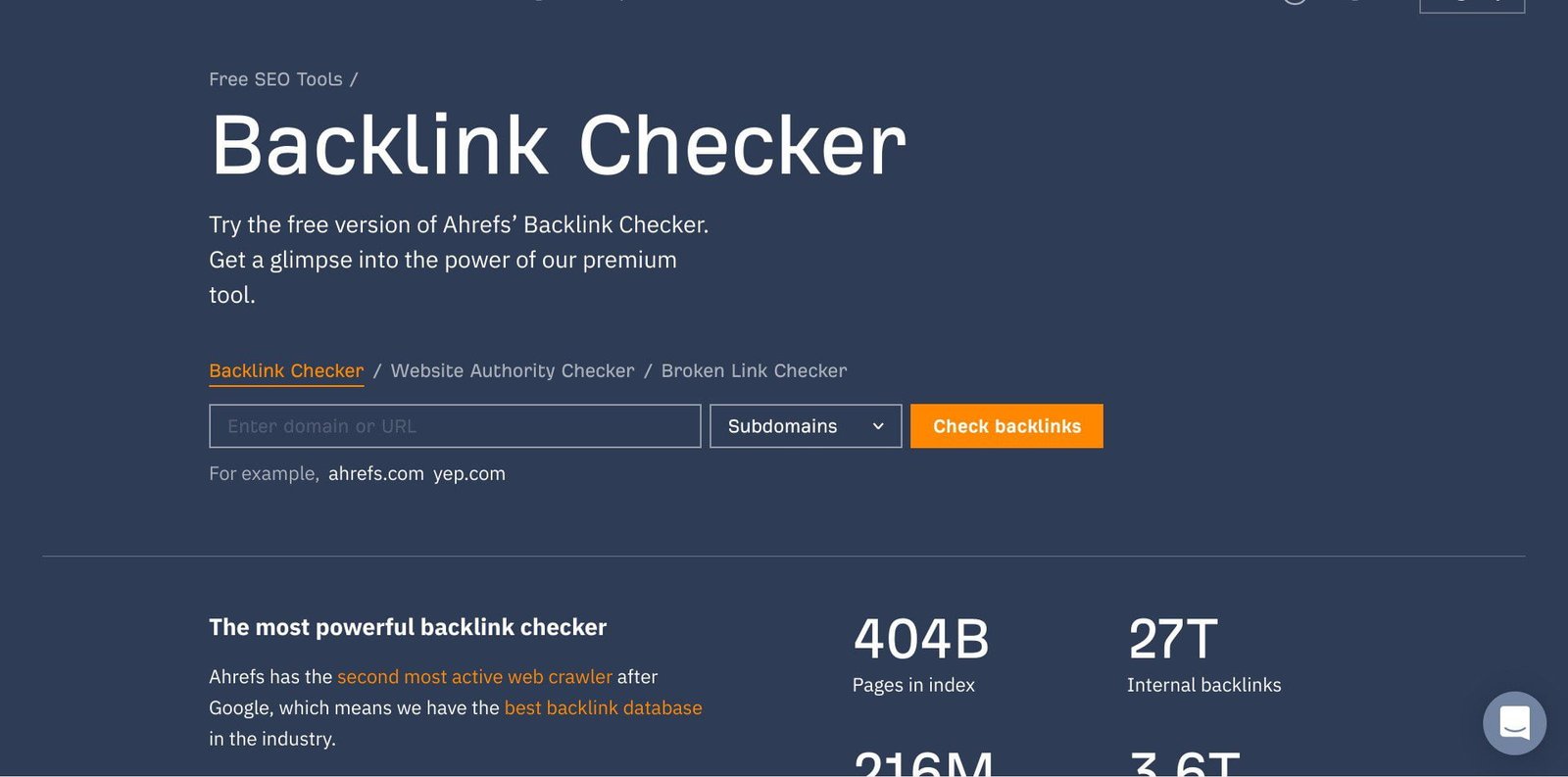
You can also research its backlink profile using popular free SEO tools including Neil Patel’s Backlink Checker, and Ahrefs’ Backlink Checker.
16. Purchase Your Domain Name from a Good Registrar
You can only purchase your domain name through a domain name registrar.
However, don’t hurriedly choose a registrar because the first-term registration is cheap. It might just be a bait.
It can cost a lot more to renew after the first term expires.
Also, review their expiration policies and other hidden charges for add-on services.
It’s recommended to read customer reviews of various domain registrars to learn about others’ experiences before making a decision.
On average, a .com domain costs, at the most, $15 a year. Anything above that may be extra fees that you need not incur.
You want to choose the right domain name registrar because transferring domains between registrars can be quite an ordeal.
This is why choosing the best registrar from the start is essential, just like your domain name.
17. Some Top Registrars Where You Can Buy Domain Names
If you plan to create your website later, it makes sense to buy your domain name now and park it until you’re ready.
Here are some of the best domain name registrars in the market.
Domain.com is the first on the list.
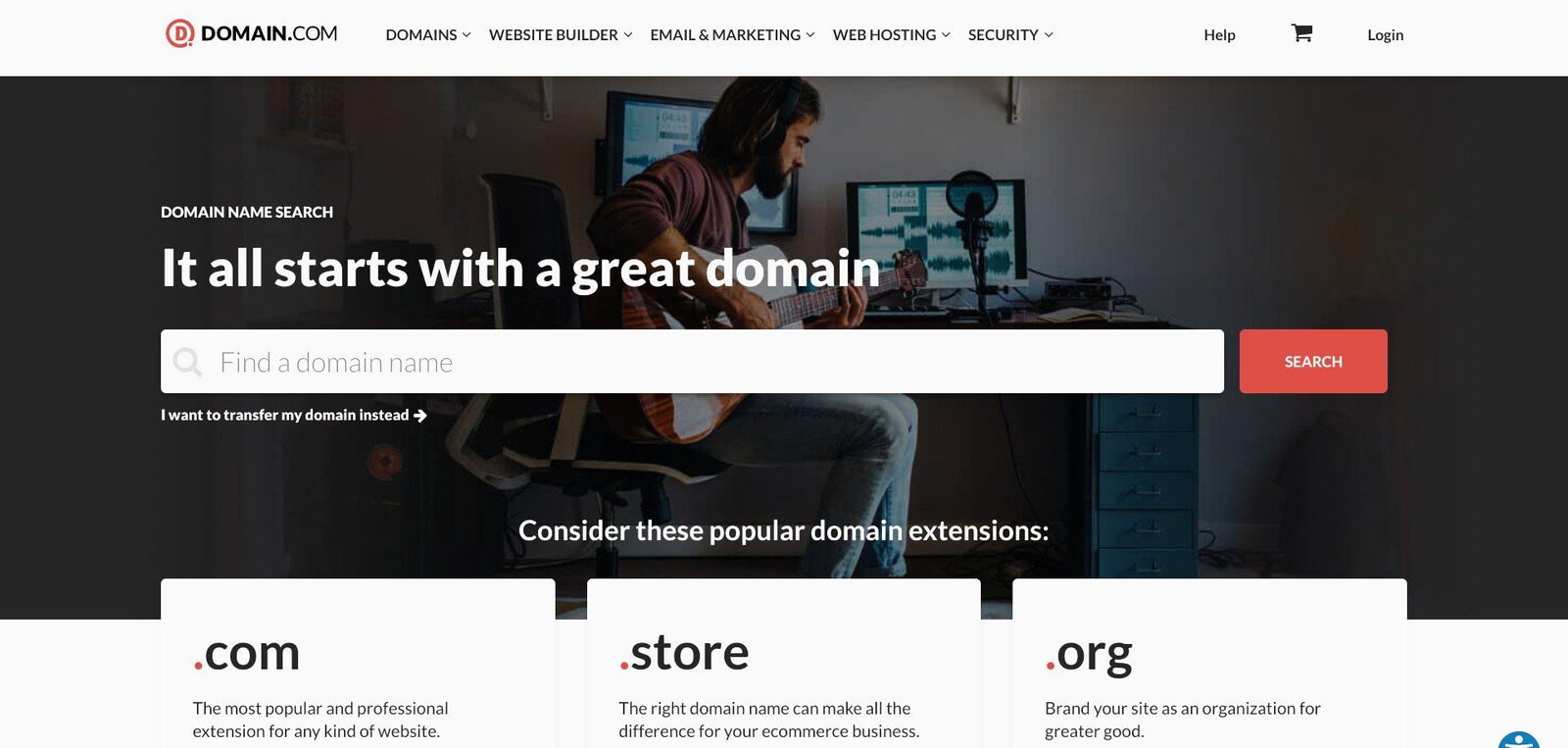
They offer about 476 domain name extensions including over 300 TLDs.
Domain.com has an easy-to-use search module, which makes finding domain names easy and quick.
They also offer virtually everything you need to manage your domain name(s), including privacy + protection, WHOIS Lookup, premium domains, and more.
They’re offering domain registration at a discounted price of $10.99 instead of $15.99 for the .com extension, for example.
Click on my coupon to claim these offers.
GoDaddy.com is the world’s largest domain registrar.
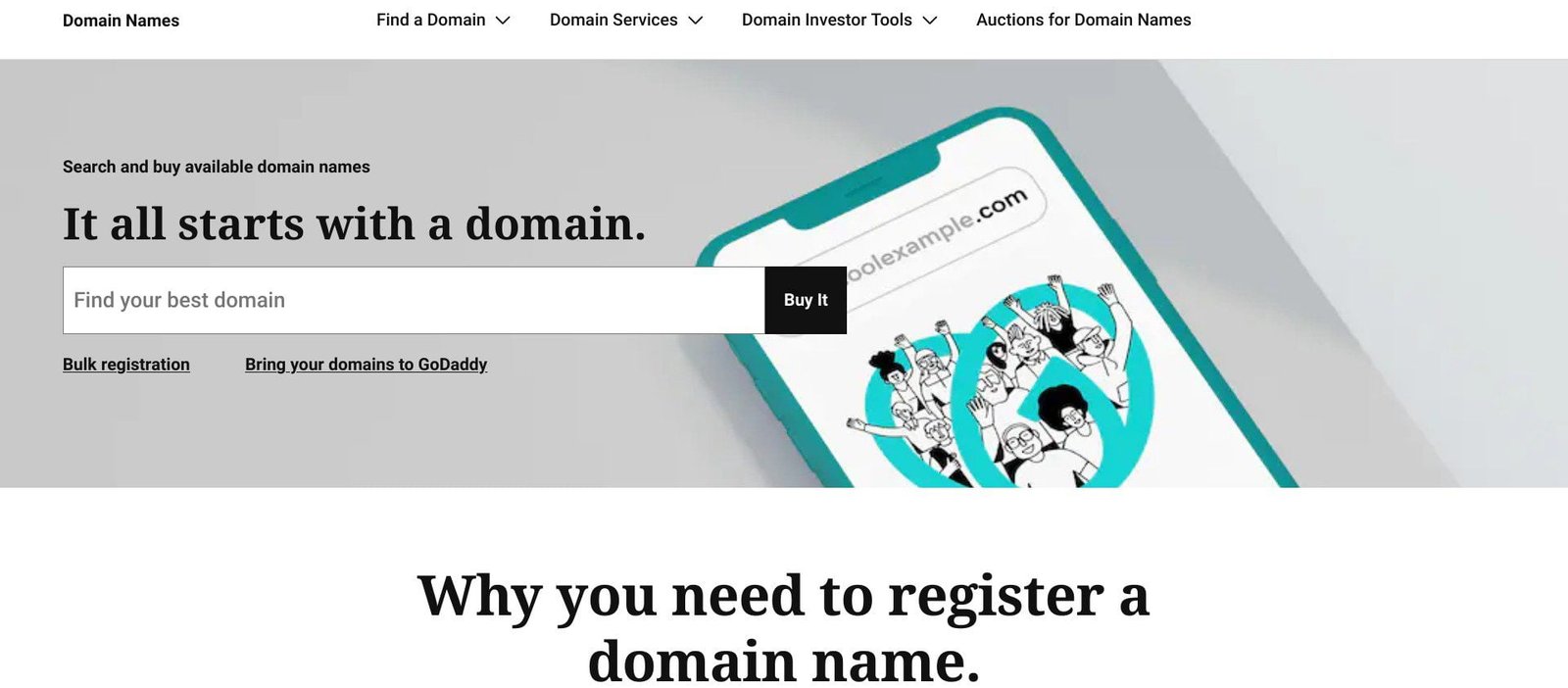
They currently have about 20 million users who trust them with more than 84 million domain names.
Also, more than 510 domain name extensions are available on their platform including the popular ones.
They have a great search tool that comes up with multiple domain name suggestions when you enter a word or phrase in the search field.
They also offer web hosting, WordPress hosting, website builder, various marketing tools, security, and more.
GoDaddy is offering “.com” extensions at £8.99 for one year. They also have 2-year and 3-year options.
Network Solutions is the oldest domain name registrar in the world.
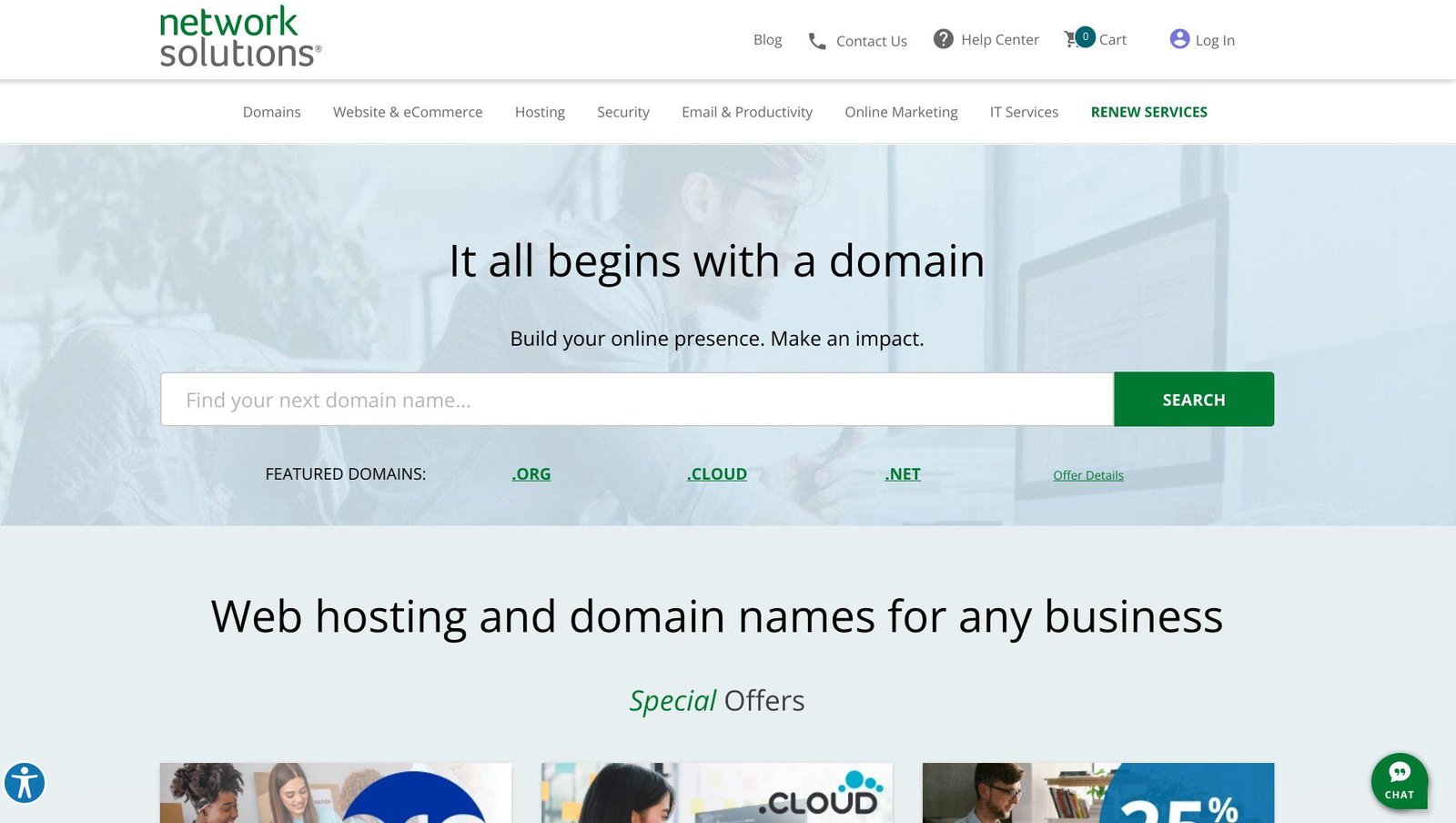
They have been around for 25 years and currently have 7+ million domain names registered with them.
They offer hundreds of extensions from top domains to country-specific domain endings to more unique extensions.
Their services include domain name registration, web design, hosting services, website security, and more.
They’re offering our users a 25% discount on all purchases.
18. Register Your Domain Name for Free (with Discounted Web Hosting)
You can save significantly on web hosting and domain names if you’re starting your blog now.
You can register your domain name for free for one year alongside heavily discounted web hosting for the initial term on popular web hosts.
For example, 2 of the 3 web hosts recommended by WordPress.org on their official website offer free custom domain name registration with big discounts on all hosting plans. They include:

Bluehost is one of the best web hosting providers. They’re very popular with beginners.
They currently power more than 2 million websites all over the world.
Web hosting now starts from $2.95/month.

DreamHost is another popular hosting company. They presently have over 1.5 million websites on their platform.
Web hosting starts from $2.59/month.
There are also other great web hosting platforms where you can get a free domain name with discounted web hosting, such as:

SiteGround is yet another exceptional hosting provider. They’re known for the top-quality services they offer.
Little wonder almost 3 million websites are currently hosted by them.
Web hosting starts from $3.99/month.
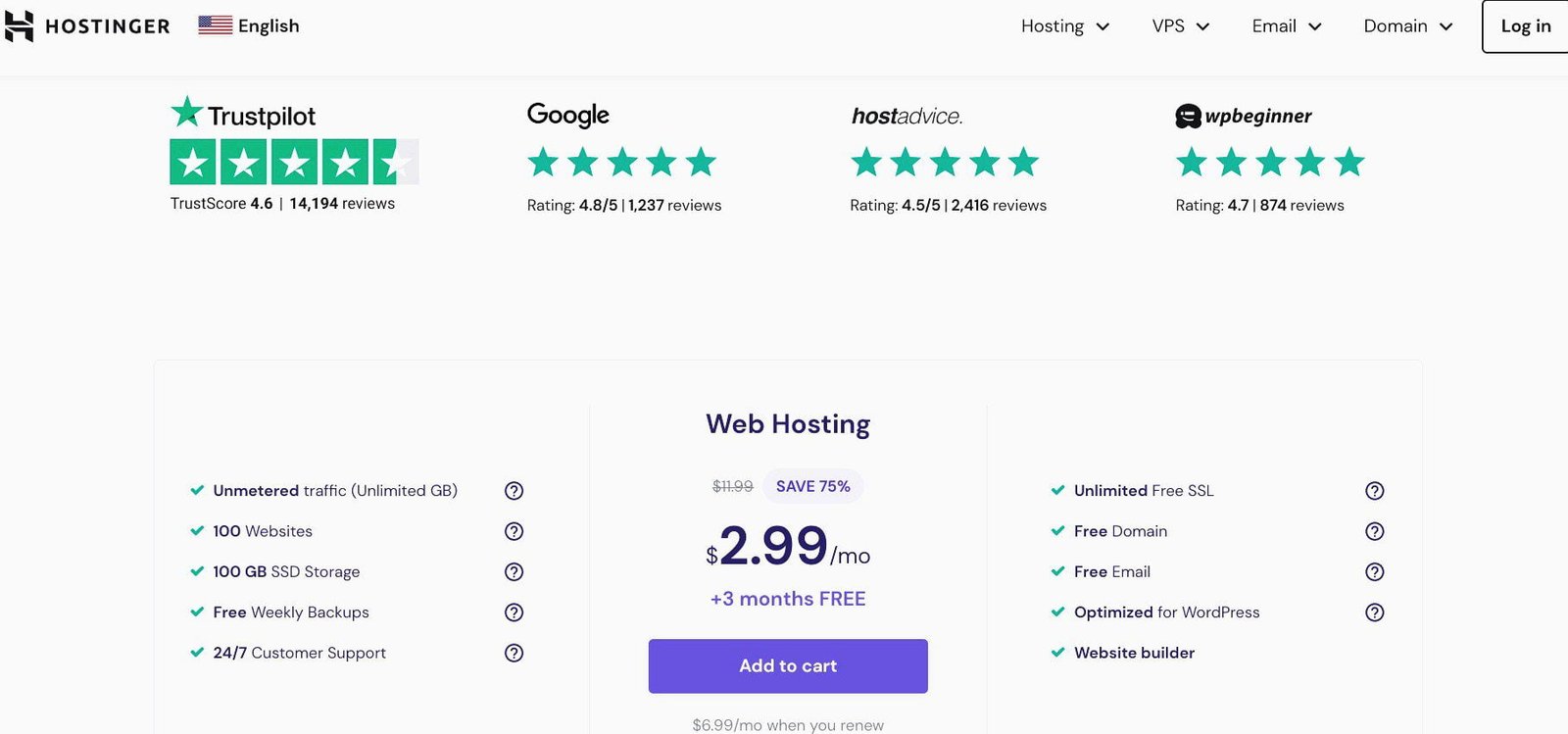
They have some of the cheapest web hosting plans on the market.
They currently host about 1.2 million websites around the globe.
Web hosting starts from $2.95/month.
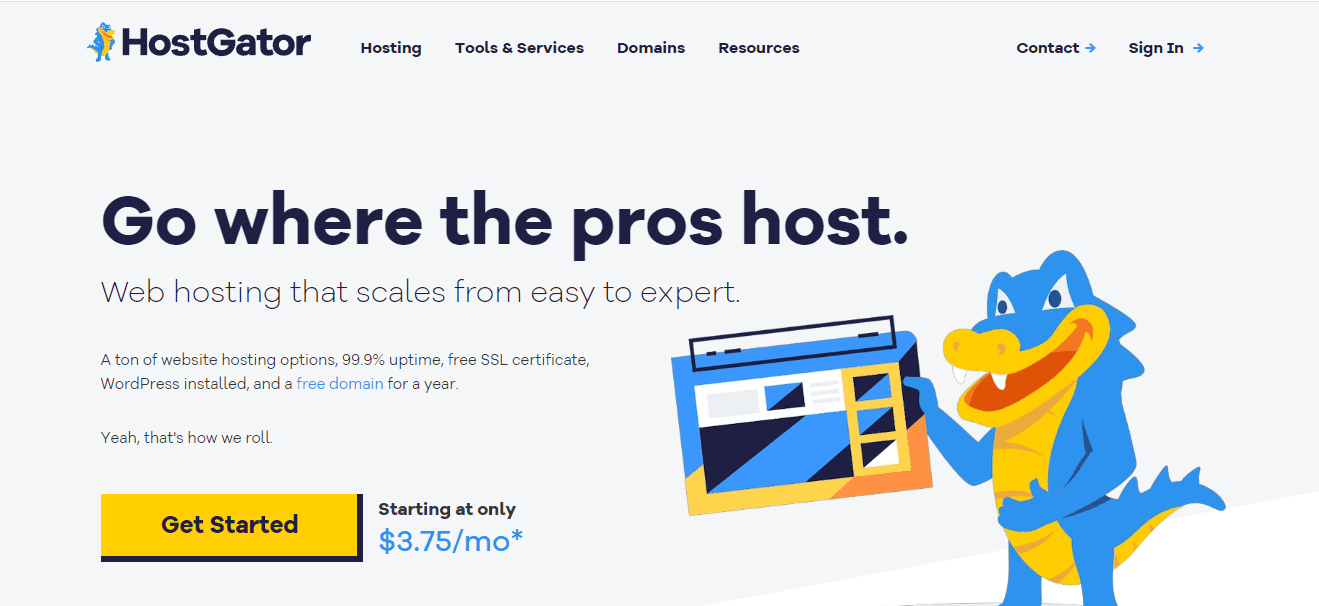
They’re one of the well-known names in web hosting. They currently house 2 million+ websites worldwide.
Web hosting now starts from $3.75/month.
Any of these companies is a fantastic choice to host your blog or website.
Frequently Asked Questions (FAQs)
What is a domain name?
A domain name is your website’s name and address online. It is how people recognize your site and the address they use to visit it.
Just like computers, every website on the internet is assigned an IP address for easy identification.
This IP address is a series of unique numbers and characters browsers use to locate it easily.
However, this string of numbers and characters is difficult for humans to remember.
To solve this problem, every website is given a unique domain name that is tied to its IP address.
So, your domain name is simply a human-readable form of your site’s IP address.
Users only need to type your domain name into their browsers when they want to visit your website.
A domain name consists of 2 parts:
➀ A top-level domain (TLD) on the right of the dot, like “.com”, “.org”, “.net”, etc., and
➁ A second-level domain (SLD) on the left of the dot. For example, the SLD in google.com is “google”.
Why do I need a domain name for my website?
You need a domain name for your site because it makes life a lot easier for your users.
Without a domain name visitors and users will find it extremely difficult to locate your content online.
The only other alternative will be to use your IP address − which may be difficult to remember.
So, a domain name helps users to easily remember and access your website whenever they want to.
How do I choose the best domain name for my website?
While it isn’t a ranking factor, your website’s domain name can affect its position in search results.
For example, if people have to rack their brains to remember your domain name, or if your domain is one that tests their spelling ability. It will affect your traffic.
So, you want to a pick domain name that’s easy to spell, fits your brand or business, and captures its future.
For more detail, see my article on how to choose a good domain name.
How can I check if a domain name is available?
You can use many good free domain checkers to check if your desired name is available.
To perform a domain name search, simply type your dream name into the search bar on a checker. Instantly, it will let you know if it is available or taken.
If it is available, you want to register it quickly to reserve it so that someone else won’t beat you to it.
What do I do if a domain is already taken?
You have a few options if the domain name you want has already been taken.
First, you can type other popular keywords in your niche into a domain name generator to bring up fresh ideas.
And second, you can match your lead keyword with another word or phrase to form a portmanteau.
When you’ve found a few names you like, ask for honest feedback from your friends and family.
What do I need to register a domain name?
Generally, domain registrars only require your basic personal and contact information – usually your email address – and a valid means of payment such as a credit card, debit card, PayPal, etc.
After confirming that your domain is available, you will be directed to a page where you need to provide your personal details, including payment information.
It is that easy.
Can I get a domain name for free?
Yes, you can.
Most leading web hosting companies include a one-year free domain in all their hosting plan packages.
You also enjoy other benefits such as heavy discounts for web hosting for the first term, free SSL certificates to secure user transactions on your site, and more.
Bluehost for example, is offering my users a free domain for the first year and a 75% discount on web hosting for the first term, so you can begin your blogging journey easily.
Should I register multiple extensions for my domain name?
If you can, it is a good idea.
First, you will protect your brand from domain name squatters who target exact domains with various gTLDs, hoping to sell them for a profit.
Sometimes, they use it to start a similar website, just to divert traffic to their site.
Some can be so malicious that they use these domains for smear campaigns.
Second, you can point these other TLDs to your site’s IP address to redirect visitors who mistype your domain extension, to your website.
Can I choose a new extension for my primary domain name?
Yes, you can but I strongly recommend that you shouldn’t.
Because people hardly remember new extensions when entering a domain name into their browsers.
They simply assume that a domain name should end with a popular extension usually “.com”.
So, you may be losing traffic.
So, people prefer to use the “.com” ending for their main domain name.
Conclusion
You don’t need to spend so much on a premium domain.
With these 18 tips and tools, you can generate fresh ideas and select the ideal domain name for your site.
There you have it – how to choose a good domain name for your website.
I hope you found the tips and advice in this article helpful.
After selecting and registering your domain name, and are good to go, you can refer to my detailed, step-by-step guide on how to start a blog and make money (anywhere).
The article includes the steps you need to take to help your website appear and rank on search results, and how to promote and monetize your blog.
However, I have a full article on 27 simple SEO best practices recommended by Google for higher rankings.
You might also want to check out my post on developing a robust SEO strategy.
If you like this article, kindly help me spread the word among your friends. Thank you!