
Last updated on February 8th, 2025 by Kenneth Ojeisekhoba
OXERBLOG > BLOG > HOW TO CHOOSE YOUR BEST BLOG NICHE
Disclosure: Oxerblog depends on its readers’ support through referral links. I may earn a small commission for some of them, at no additional cost to you.

Selecting the ideal niche can be one of the toughest challenges for anyone starting a blog to launch their online career.
You may be struggling to pick the right niche, or perhaps you’ve already chosen one but are unsure if it was the right decision.
Regardless of your situation, you’ve come to the right place.
This post is designed to help you easily identify and select the best niche for your blog from the very beginning.
In this guide, you’ll learn:
✓ How to easily find your potential blog niches
✓ How to test the prospects of your blog topic ideas
✓ How to pick out your most profitable niche ideas
✓ How to choose your best blog niche
✓ Common mistakes to avoid
✓ And much more
Why Is Picking the Perfect Niche So Important?
First, choosing the right niche can help get your blog off to a flying start.
But if you choose wrongly, you’ll be a square peg in a round hole.
And no matter the time and effort you put into building your blog, you’ll have very little to show for your investment. Because you’re unsuited for the niche.
You can even blog about some topics and achieve some level of success.
However, you’ll only distinguish yourself when you find that one niche that fits you, your interests, and your skillset perfectly.
Second, selecting your perfect blog niche can spell the critical difference between success and failure in blogging.
Because the niche you choose plays a major role in shaping your blog’s future.
In other words, how successful your blogging career and business becomes will depend largely on the blog topic you select.
Now, some people are very good at whatever they do. They are multi-skilled and can produce remarkable results in different areas.
But for most of us, including big names like Usain Bolt, Tiger Woods, and Serena Williams, we tend to stand out in one thing, and perform averagely in some areas and woefully in other fields.
For example, Usain Bolt’s name is synonymous with the sprint. But when he decided to try his hands at football after he retired, he soon discovered he wasn’t so good at it.
Can you imagine Tiger Woods, the golf legend, on an NBA court, or Serena Williams, the tennis star, in track and field?
It is the same in the blogging world; most successful bloggers become popular for one blog topic.
For example, Brian Dean of Backlinko is known for SEO strategies, while Neil Patel has made his mark in digital marketing.
Likewise, identifying and selecting your perfect niche is the jumping-off point for an excellent blogging career and business, and indeed, for every online enterprise.
If you ask me, you shouldn’t start building your blog until you have decided what to blog about.
It makes sense to spend time, in the beginning, to figure out the best niche where you can easily excel instead of rushing into starting a blog on a topic you are not very sure about.
Again, you want to focus on one topic you hopefully become synonymous with.
With that, below is a table of contents covered in this post.
How to Choose Your Perfect Blog Topic
◾ How to Brainstorm Blog Topic Ideas
◾ How to Test the Viability of Your Niche Ideas
◾ The 5 Factors that Make Up a Profitable Niche
◾ 273 Niche Ideas with A Great Chance of Success Today
◾ Frequently Asked Questions (FAQs)
If you’re ready, let’s get started.
What Is A Blog Niche?
A blog niche is simply the spotted needs, wants, interests, and problems of a specific group of people on the Web that you have the passion, expertise, and plan to address through your content for many long years, and hopefully, make money from.
From the above definition, a blog niche is much more than just focusing your content on a topic you know a lot about or are interested in, hoping to attract people who share the same interest.
While there are one thousand and one topics you can delve into that way and get some results, jumping off like that is simply taking a gamble.
To get optimum results, the starting point has to be the needs, desires, and problems of a particular community of people in a specific niche you’re cut out for.
If one of your motivations for starting a blog is to make money, then your target users’ needs, wants, and problems are the jumping-off point.
On the other hand, if you aren’t keen on earning money from your blog, you can start with whatever fascinates you and accept whatever results you get.
But if you plan to monetize your content, the first thing you need to know is this:
The people (or searchers, readers, visitors, users, audience, customers, etc.) are the life, the vital spark of any successful online enterprise, including any blogging business.
To put it another way, building a successful blog – and indeed, any online business – begins and ends with users.
So again, a blog niche is picking out the specific needs, desires, problems, etc. of a particular audience. Then, painstakingly create relevant and helpful content after content in your blog to cater to them.
That means in your search for your best blogging niche, you’re not just looking for a topic to blog about.
Rather, you’re looking for a specific group of people with particular needs, wants, problems, etc. that you’re well equipped and happy to help through your articles in the hope of earning an income from your work.
This is what this post is all about – to help you pinpoint that one area where you can produce amazing results.
Because you’re well suited to deal with the needs, problems, etc. of the people in that target niche. And, in the process, earn some income.
Now you know what a blog niche is, let’s come up with a list of ideas.
How to Brainstorm Blog Niche Ideas
At this stage, you want to brainstorm as many niche ideas as possible and put them down on paper as they come to you.
Write down every niche idea that comes to mind. Don’t worry if your list is long.
That said, two factors should guide you during your brainstorming sessions.
They are your expertise and your passion.
These two factors should be the springboard for all the niche ideas you come up with.
Your Expertise
Every one of your blog topic ideas should spring from your expertise.
Expertise can be formal expertise or, as Google calls it, ‘everyday expertise’.
Formal expertise is the prerequisite education or training you must acquire in a formal setting before you qualify to handle or practice the subject.
While ‘everyday expertise’ is the day-to-day, first-hand experience you gather from your life experiences to handle the topic.
Here’s why you should only list topics you have expertise in:
Formal expertise and first-hand experience are critical elements in one of Google’s important Page Quality rating factors known as E-E-A-T− Experience, Expertise, Authoritativeness, and Trust.

Among other quality characteristics, Google considers the level of E-E-A-T to rate every page and website.
Therefore, it makes sense to only list topics you either have first-hand life experience in, or formal education for.
Google says, “High-quality websites and pages need enough expertise or life experience to be authoritative and trustworthy on their topic.”
In other words, expertise or first-hand, life experience is a key factor in determining whether the information on a page or website is quality, reliable, and can be trusted.
So according to them, there are all kinds of “expert” websites including sites that require everyday expertise such as gossip websites, humor websites, fashion websites, etc.
In their Search Quality Evaluator Guidelines, Google categorizes topics into two broad groups based on their sensitivity.
▪ Your Money or Your Life (YMYL) Topics
YMYL topics are niches that usually require appropriate formal expertise because of how sensitive these topics are.
They need high E-E-A-T because, according to Google, they could impact a person’s future happiness, financial stability, safety, or health.
YMYL topics require a high standard of accuracy, and, in some cases, well-established consensus by experts.
Because these niches require a high degree of trust.
So, you must have the required formal education (or training) and certification(s) for any YMYL topic you want to blog about.
In other words, you shouldn’t start a blog on a YMYL topic just because you know a lot and are passionate about it.
It will be a sheer waste of time. Google won’t rate your content high if you don’t have the requisite formal expertise.
Examples of YMYL topics include:
✓ News and current events
✓ Civics, government, and law
✓ Finance
✓ Shopping
✓ Health and safety
✓ Parenting
✓ Artistic content that is related to YMYL topics
✓ Fitness and Nutrition
✓ Finding a job
✓ Choosing a college
✓ Housing Information
✓ Information or claims related to groups of people based on age, disability, ethnicity, gender identity and expression, immigration status, race, and many more.
✓ And much more
▪ Less Sensitive or Non-YMYL Topics:
This second category of topics requires less formal or everyday expertise.
In other words, you don’t need formal learning to be regarded as an authority in the niche.
If you can write extremely detailed, helpful, and relevant content, or if you have valuable first-hand life experiences and tips that you can share, you can be considered a guru on the topic.
So, Google considers life experience and ‘everyday expertise’ appropriate for non-YMYL topics to rank pages and websites.
Examples of non-YMYL topics include:
✓ Food and Recipes
✓ Humor
✓ Travel
✓ Search Engine Optimization (SEO)
✓ Writing
✓ Reviews
✓ Forums
However, people with personal experiences in some areas of YMYL topics can also be seen as experts.
For example, if you’ve had a loved one who lived with a terminal disease like leukemia and want to share that experience, you’ll be regarded as an expert as long as you limit it to that.
You cannot delve into the more sensitive areas of that topic to give medical advice like qualified health professionals.
I have compiled a long list of 273 popular niches with great prospects for both groups you want to look at.
Now, most articles will discourage you from selecting a competitive topic.
Because they feel you don’t stand a chance with so many big names in the niche.
But I’ll say this: If you have expertise or experience in a so-called saturated niche, and can bring a fresh angle to the topic, add it to your list.

So, if you go through search results and find that you can offer a completely different perspective on the topic, go ahead and include it in your list.
If Google finds a different view that is reliable and useful to users from an expert, they will rank it.
To summarize, expertise is a requisite for every topic, though it varies from topic to topic.
Again, list only topic ideas you’re an expert on and can answer comprehensively, whether YMYL topics or non-YMYL topics.
This should be top in your SEO strategy if you want your website and pages to rank high in Google.
Your Passion
Your niche ideas should also spring from your interests.
One of the beautiful things about blogging is that you get to do what you like and enjoy, not what is available.
Your niche ideas should be your enthusiasms that you can share and talk about in your blog at least once a week, for many years.
Moreover, you need energy and passion to stay in the game, especially when things are not working.
Because blogging is a marathon, not a sprint.
One of the main reasons people burn out and give up a few months down the road even though they have the expertise is because they are in a niche they’re not really excited about.
So, check off every topic on your niche idea list that you know you’re passionate about now, and will still enjoy writing about way into the future.
One way to know you love a blog topic idea is to quickly write down at least 21 articles you can create quality content about, in your blog.
Once you have your list of possible niche ideas, you’re ready for the next crucial stage where you’ll be testing their potential.
However, at this point, you can choose a topic and start to create content on it if you aren’t concerned about producing the best results possible.
But to build a successful blog, you’ll want to take each niche idea through the next step, to test their feasibility.
How to Test the Viability of Your Niche Ideas
You need to test the potential of each of your blog topic ideas.
This will help you narrow your list to the most profitable niches before you pick your perfect blog topic, based on your analyses and projections.
5 factors determine the chances of any niche idea, and there must be enough of these 5 elements for the niche to be considered lucrative.
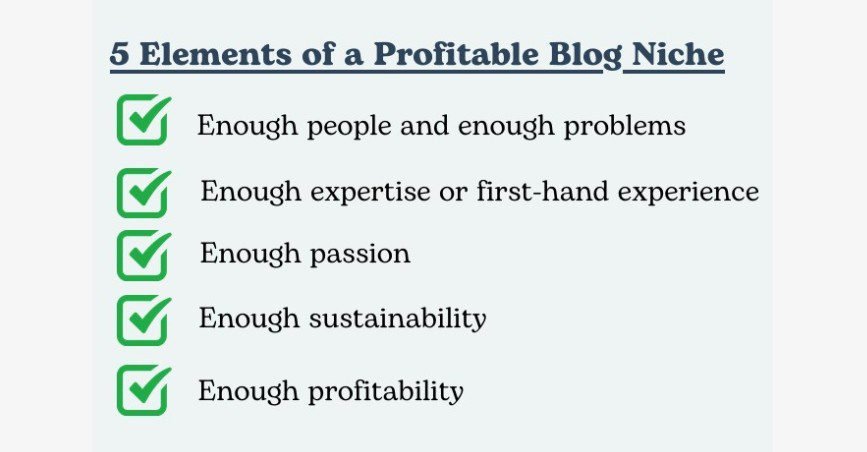
I have named it the Enough Niche Test.
It is not enough to have these 5 factors in a niche idea; you must have enough of all these elements for it to stand a good chance of success.
Therefore, don’t pick a niche if it does not have enough of these 5 elements.
In other words, 4 over 5 isn’t good enough; it has to be 5 over 5.
So, any of these five scenarios wouldn’t be a perfect niche:
1. If a niche is your area of expertise and you’re passionate about it and can earn an income from it for years to come, but it doesn’t have a big enough audience – You won’t be able to attract a good-sized traffic.
2. If a topic attracts a lot of searches that you’re very interested in and has multiple streams of income opportunities and a big future, but you have no expertise in the field – Google will rate your content low.
3. If a niche has enough people with different problems that you have considerable expertise to help, and can make enough money for a long time, but you are not enthusiastic about it – You’ll most likely give up on it soon.
4. If a niche has a sizeable number of queries that you have adequate knowledge and a strong passion to solve and can earn a good income, but it isn’t sustainable – You may have to start over.
5. If a blog topic has a reasonable monthly search volume, plus enough problems that you’re experienced and genuinely happy to address, and will likely be around for decades, but has limited monetization channels – You won’t make enough money.
So these 5 factors must be present in considerable amounts for a niche to be profitable.
With that, let’s now look at the definition of a perfect niche.
What’s an Ideal Blog Niche?
An ideal blog niche is a specific area that attracts enough queries that you have enough expertise and enough enthusiasm to answer in your blog, and in the process, make enough money for many long years.
Let’s look at each element in detail and how to research them.
The 5 Factors that Make Up a Profitable Niche
❶ Enough queries
This is the first defining characteristic of a successful blog niche.
For you to consider a niche, it should attract a decent-sized audience who has enough queries about the topic that you can address with your content.
So, find out how many people are interested in the topic and how much they want to learn about it.
How to find out the volume of search interest in your blog topic ideas
Start by researching the ‘web search interest over time’ on Google Trends.
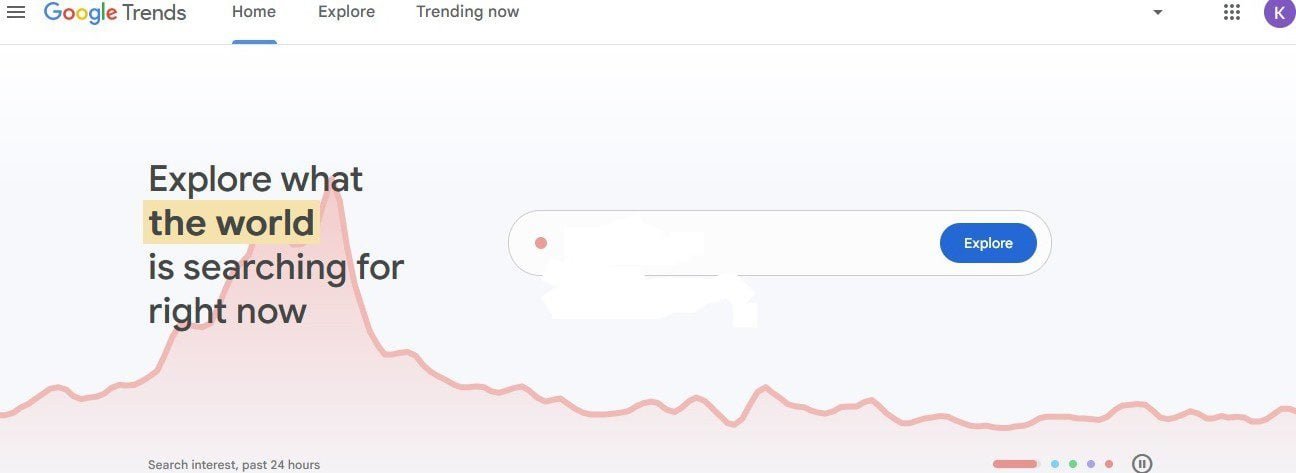
Google Trends will give you a general but accurate analysis of people’s interest in your niche ideas. Because it is owned by Google.
Simply type a niche idea into the search box, and select the region and the period you want to analyze.
I always like to check for the past 12 months, to see how stable and how high people’s interest in the topic is all year round.
Below are some common patterns of search interest that you’ll find for most niches.
➀ Some topics will have high or low but relatively stable search interest over time.
For example, let’s say one of your topic ideas is ‘Food and recipes’. Enter it in the ‘Search term’ field and select the region and length of time.
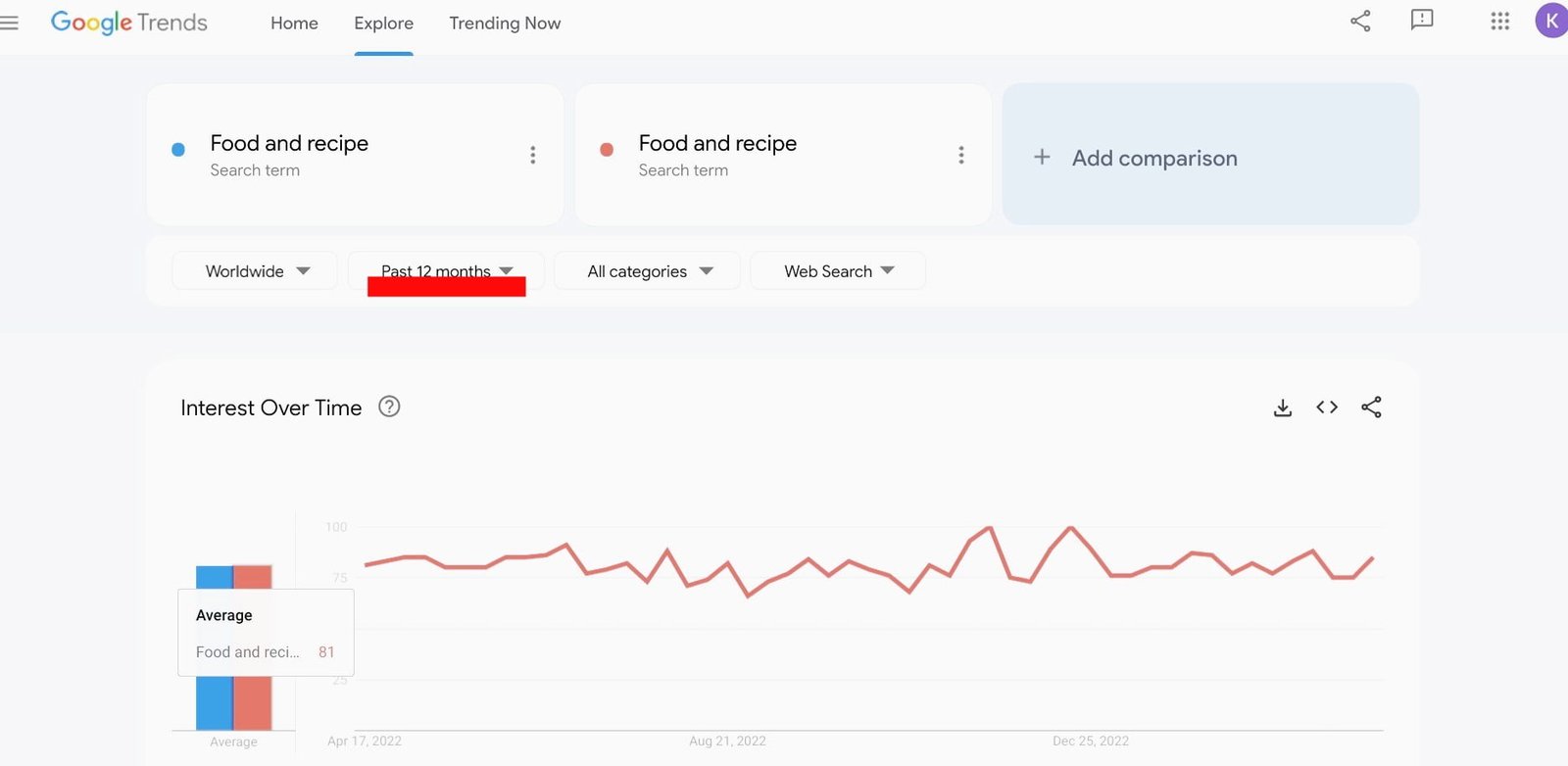
The web search for ‘Food and recipe’ is quite stable all year round, averaging 81. That’s quite high.
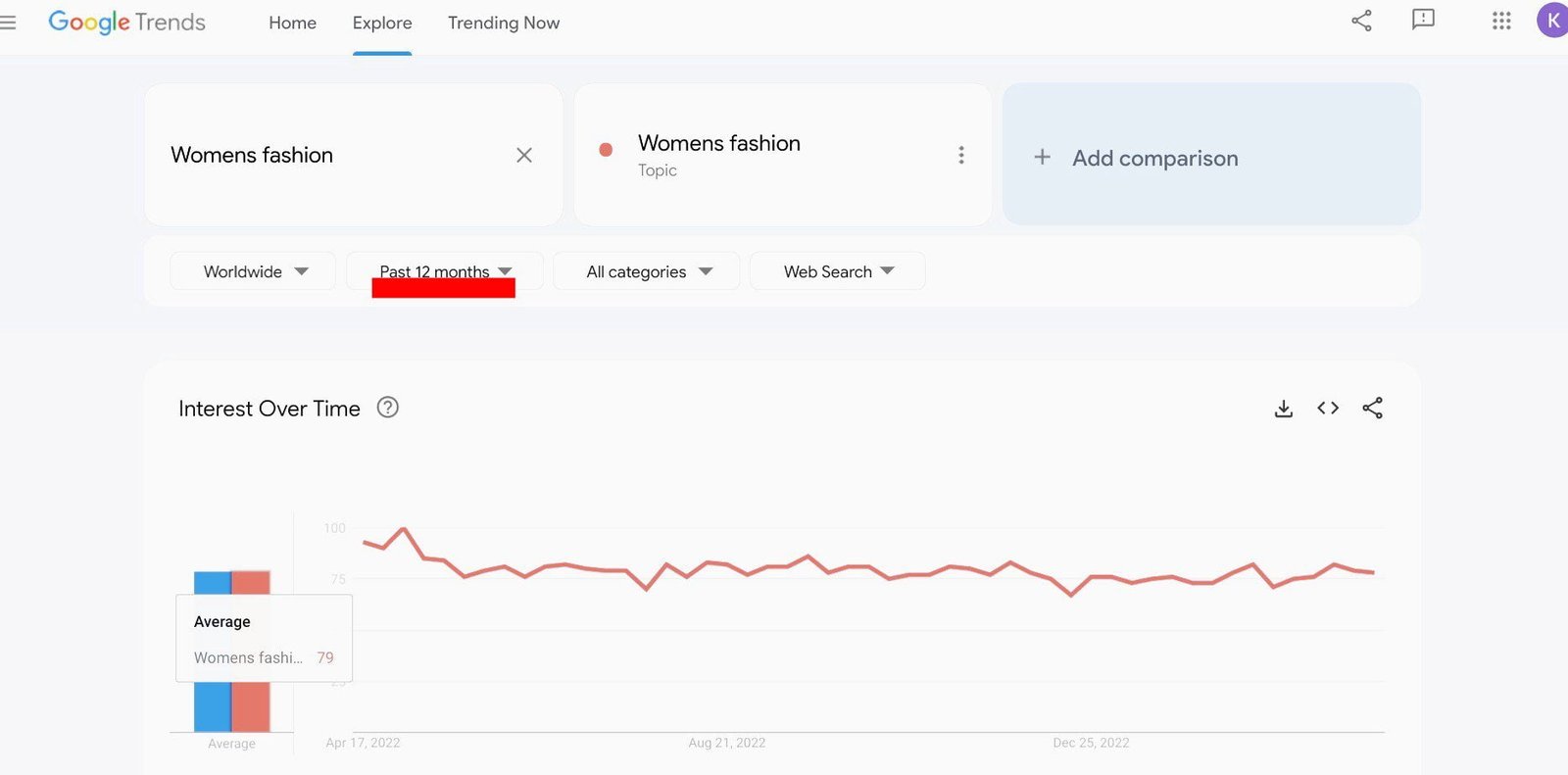
Let’s see more examples with the same pattern of search interest:
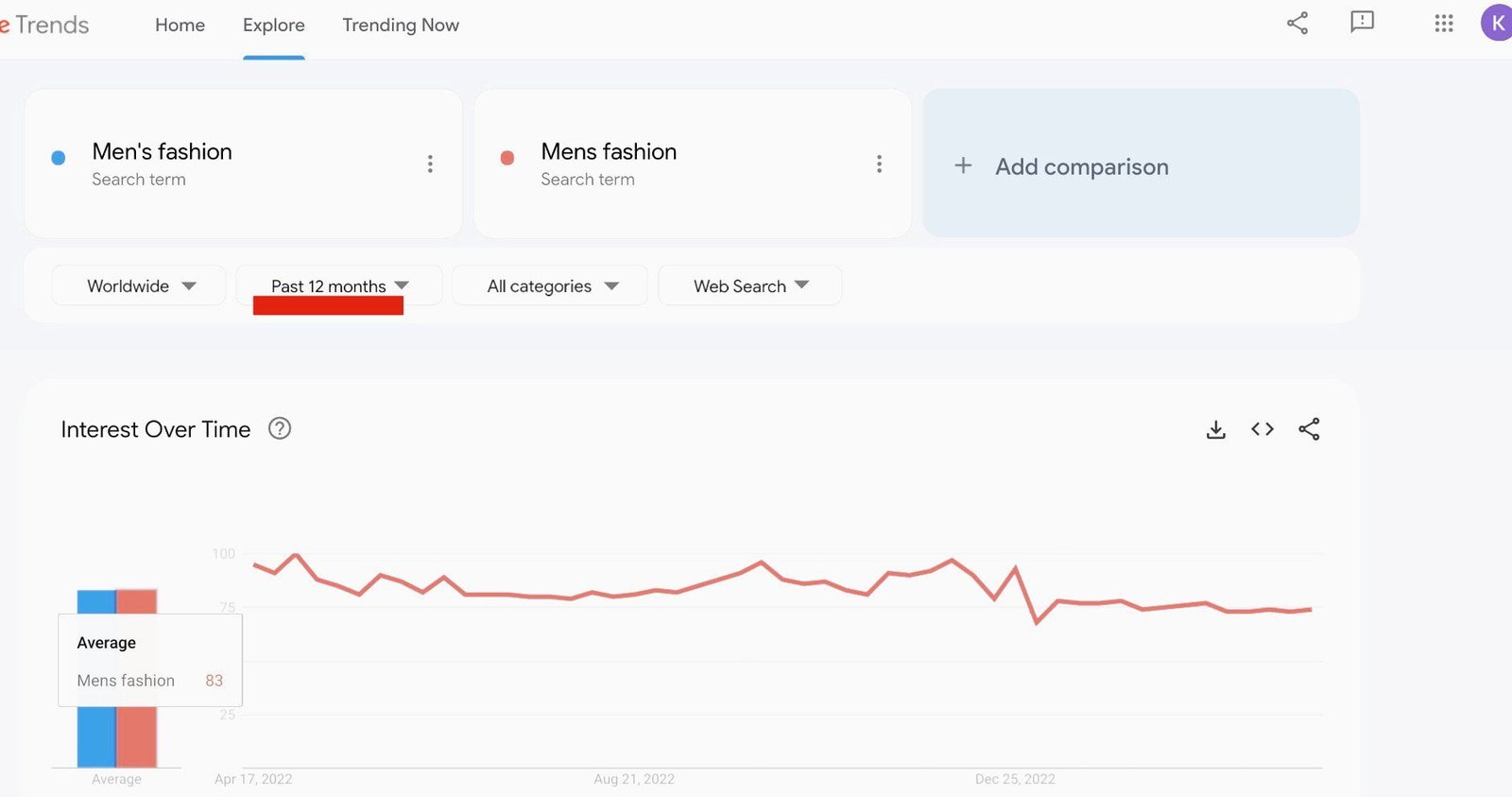
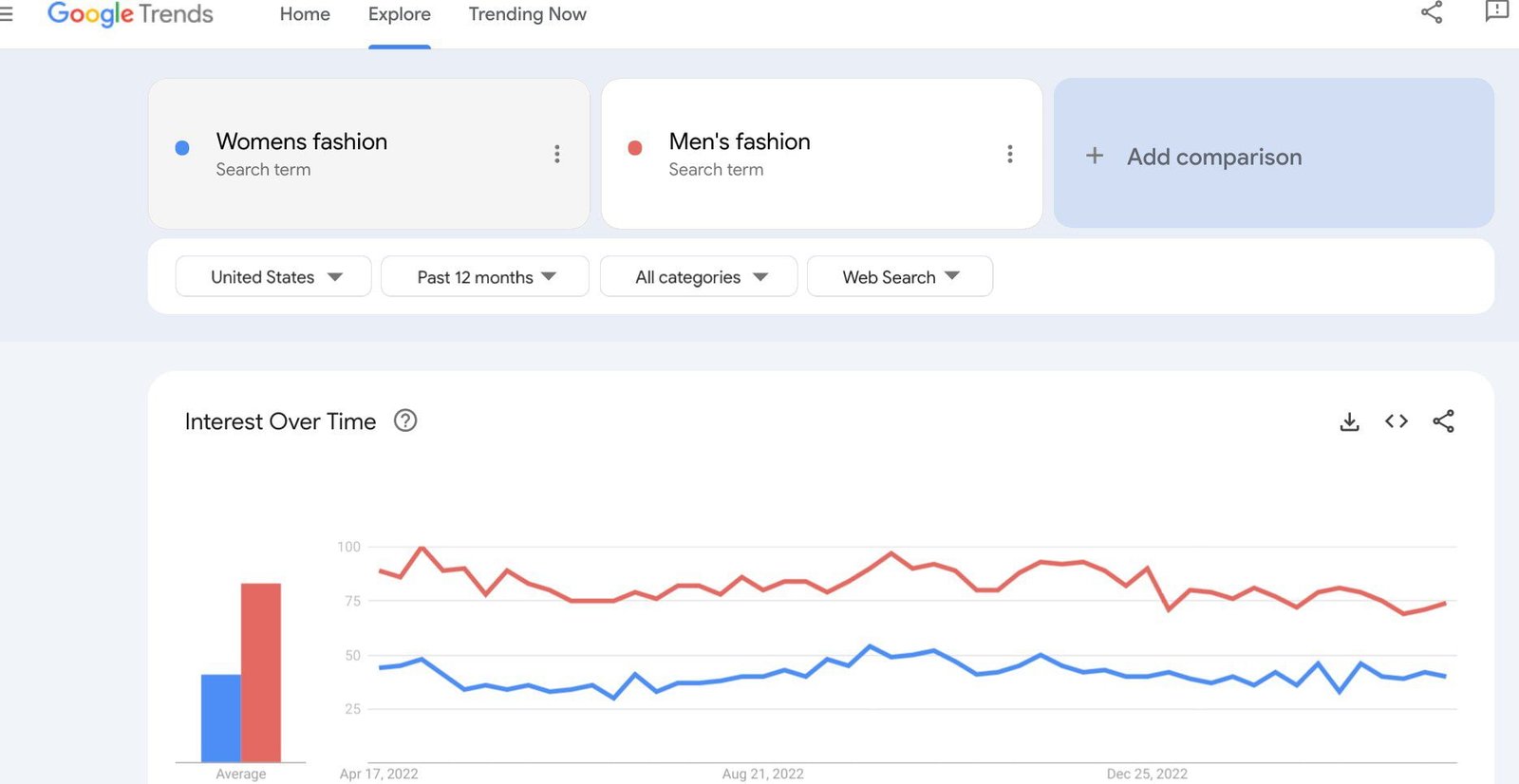
Men’s fashion is also relatively high and stable year-round.
➁ Some topics have search interest that steadily rises over time.
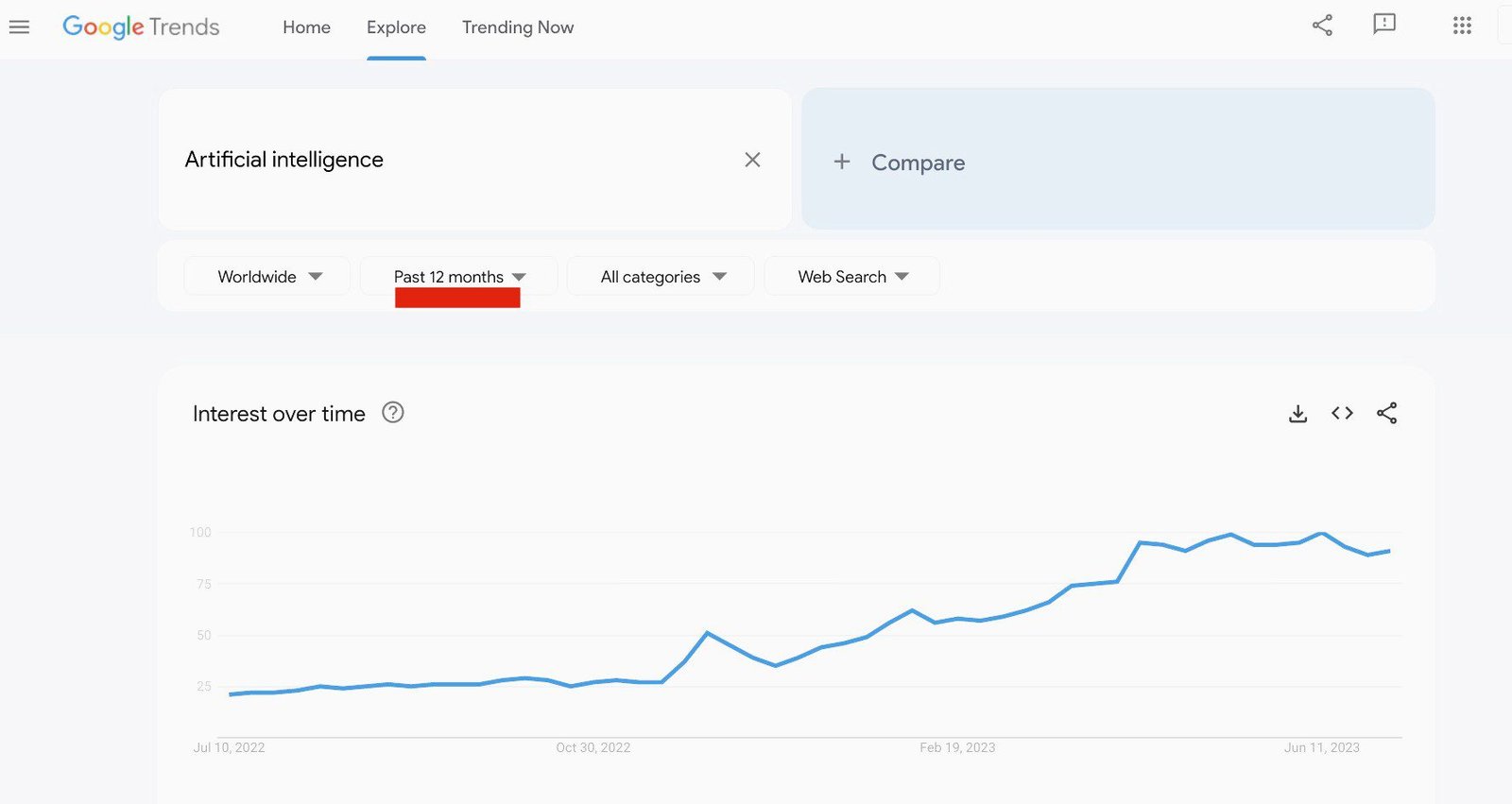
A current example is ‘Artificial Intelligence’. There is an increasing interest in the topic globally.
➂ Some topics attract high search interest that dwindles with time.
A good example is ‘Coronavirus’. Search interest has gradually shifted from the pandemic.
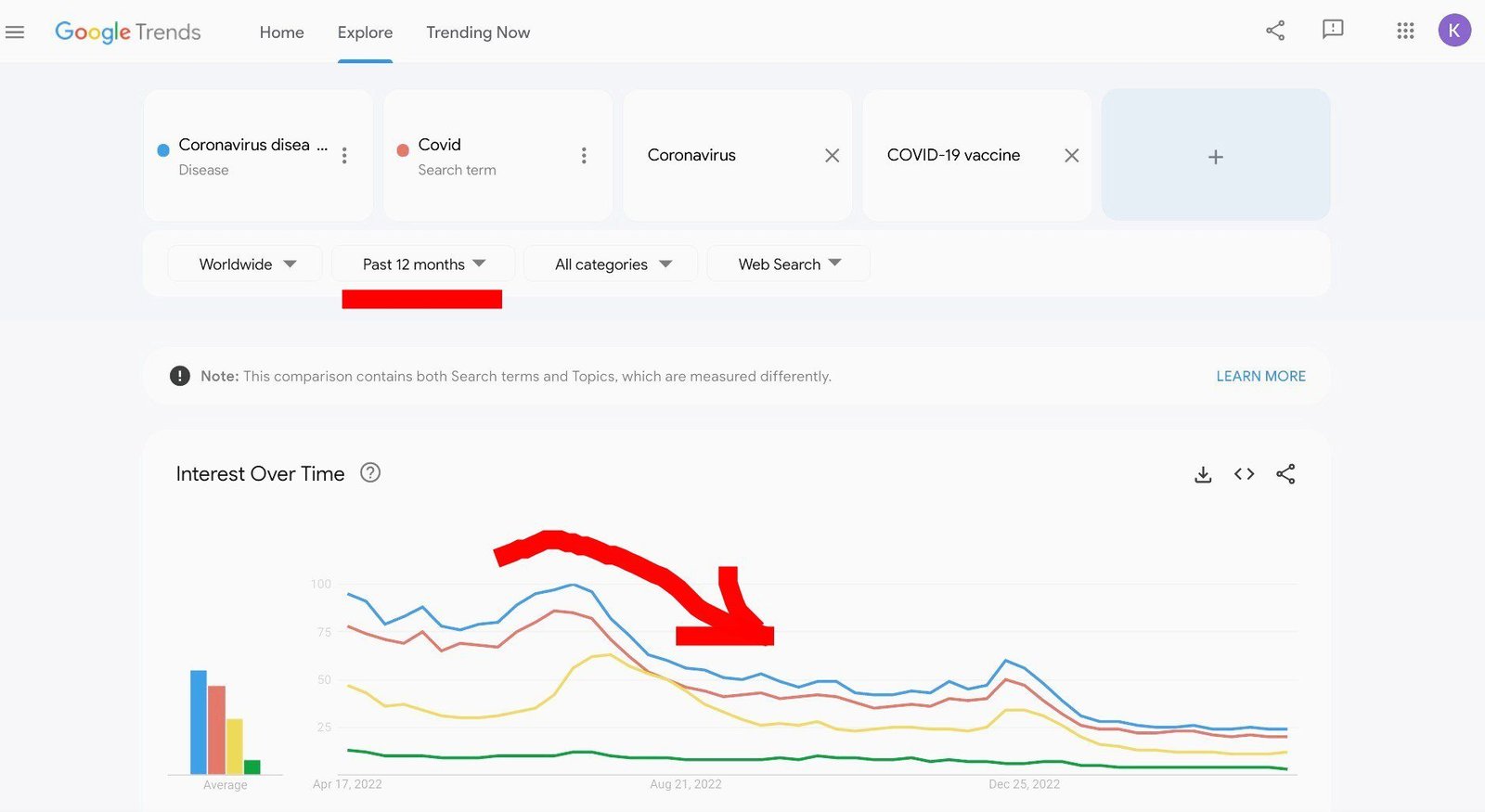
So, any blog created solely for the disease in the thick of the pandemic will, by now, be losing traffic.
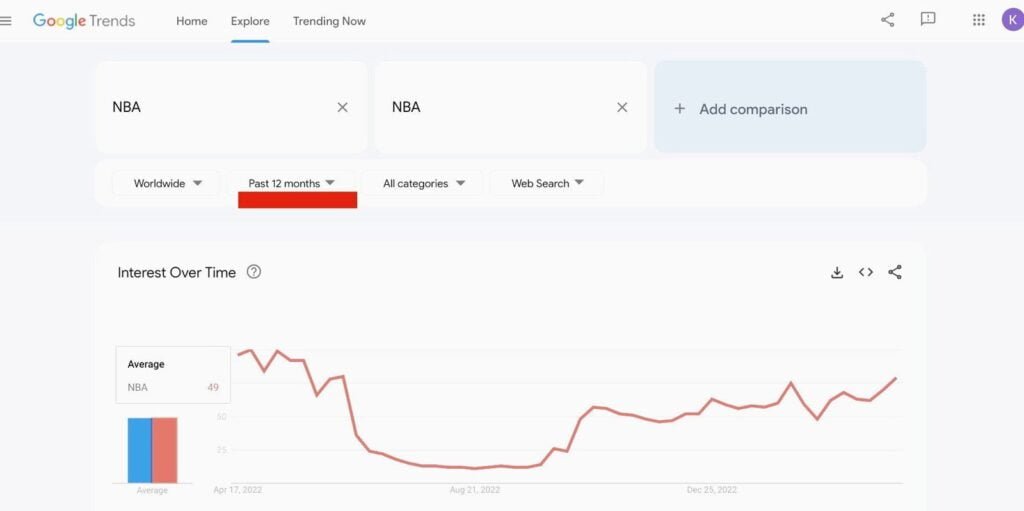
➃ You’ll also find topics with undulating search interest.
For example, popular niches like the ‘Premier League’ and the ‘NBA’. Search interest in these topics drastically reduces during their off-seasons.
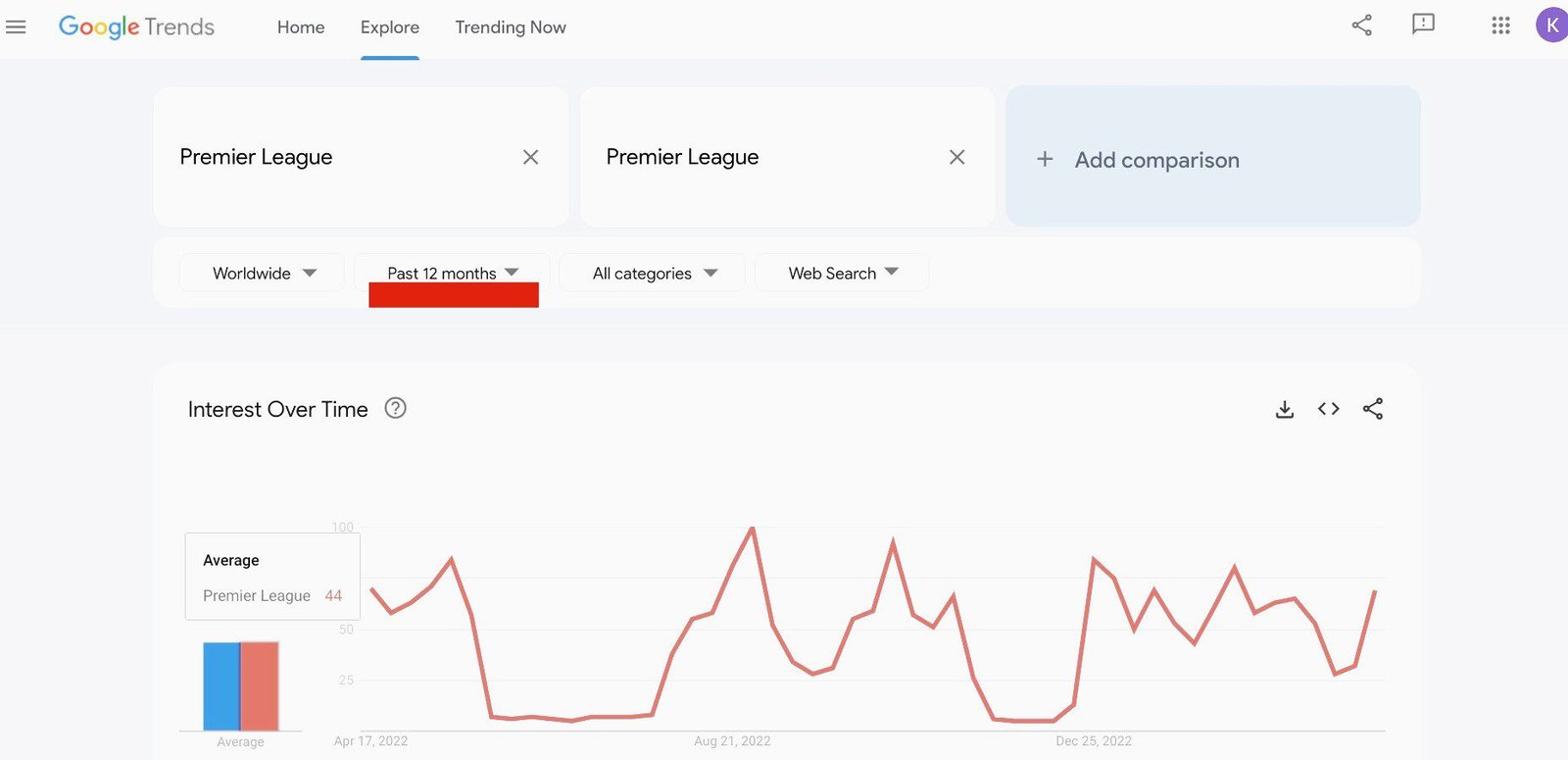
➄ Some topics are more or less a flash in the pan.
For example, the ‘World Cup’.
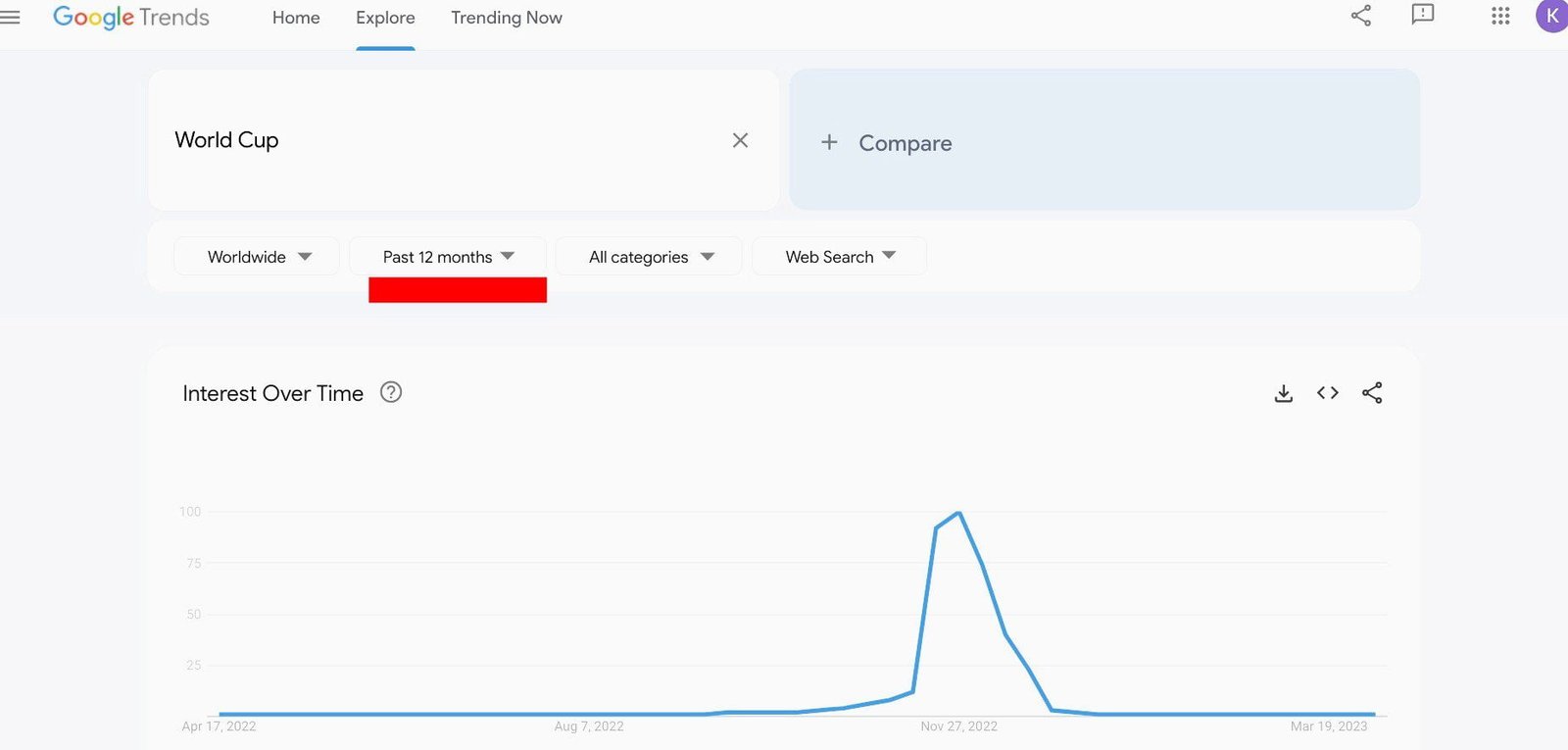
The euphoria dies out once the event ends.
You want to only list blog topics with reasonably high search interest all year round (or at least, most of the year).
First, test each niche individually; then compare topics to see which has more search interest.
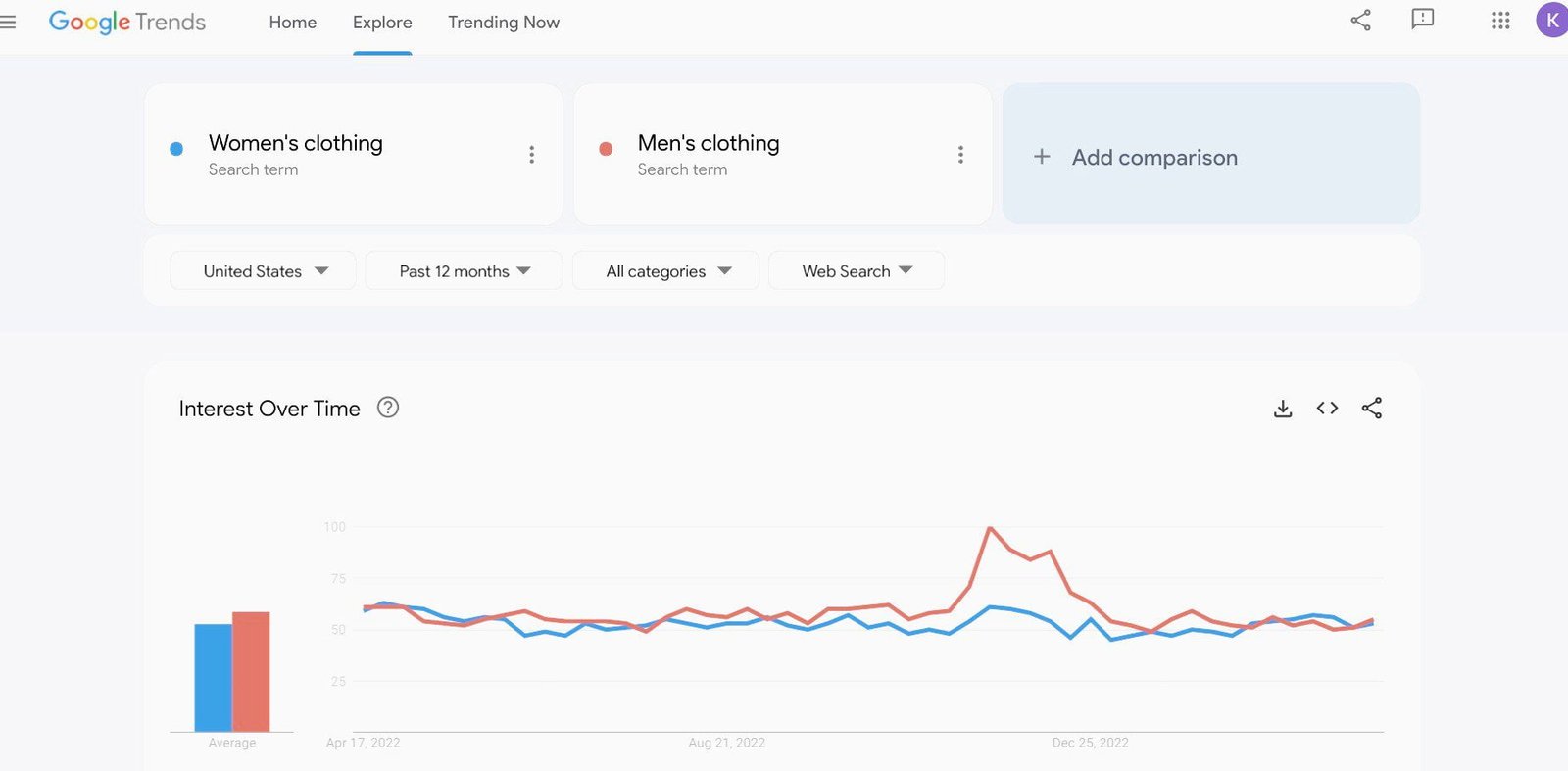
It’s also a good idea to check the search interest for other terms related to your topic ideas.
Next, find the exact number of people interested in your niche ideas with popular freemium keyword research tools like Ubersuggest, SEMrush, and AnswerThePublic.


Simply enter each of your potential niches into a keyword tool.
Most of these tools will allow you to start with their free version, but it is limited.
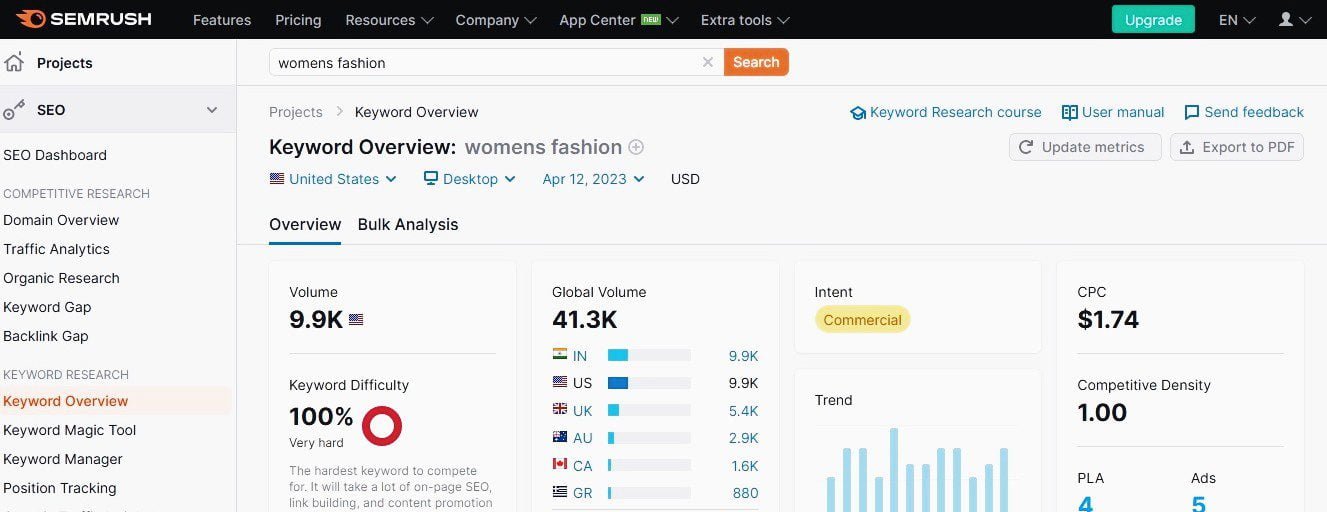
Also, brainstorm keywords related to these niches and check their monthly search volume.
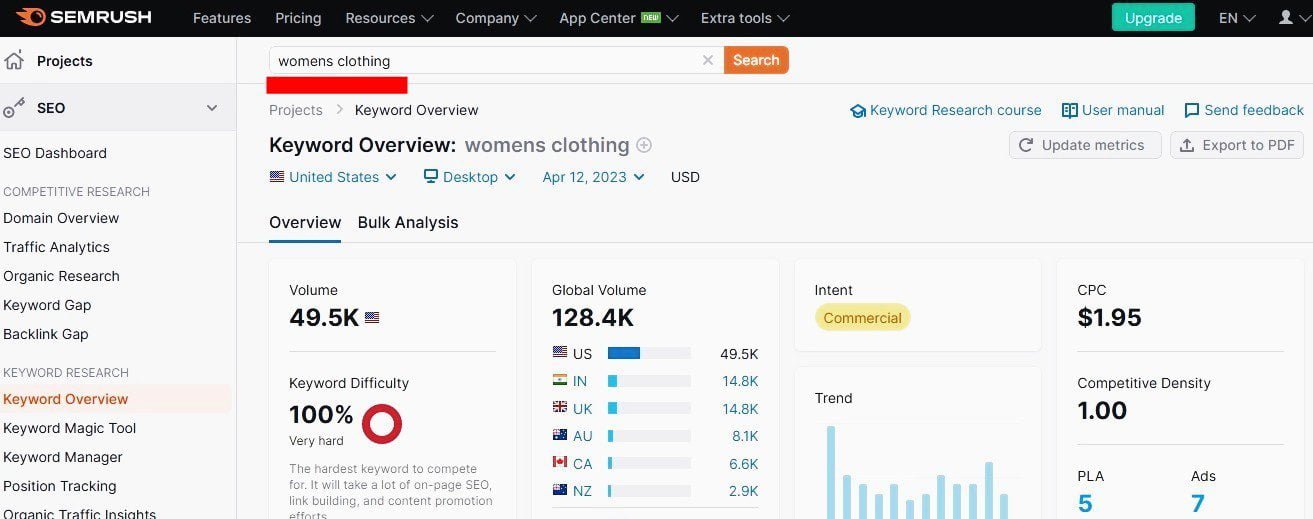
Many research tools will also show other related queries and their actual number, among other analyses.
These keywords reveal exactly what searchers want to find out about the topics. These are terms you can also address in your blog.
So, a keyword research tool will help you discover the volume of searchers for a niche idea and the different content ideas they want to learn, among other things.
Take this opportunity to write down all the content ideas you can find for each niche idea. This will come in handy later.
You want to check off a topic once it has a high monthly search volume and various content opportunities.
If it doesn’t have enough of both, I recommend you drop the idea.
❷ Enough expertise/Experience
From the list of blog post ideas you’ve gathered for each niche, you should be able to tell if you have enough expertise or first-hand experience to adequately address them in your content.
People want to learn from the experts.
That’s why expertise and experience are key elements of Google’s E-E-A-T.
Google says expertise and authoritativeness of a site increase its quality.
In Google’s own words, “your expertise is what primarily determines your site’s authoritativeness and trustworthiness.”
The more (or less) expertise you have, the more (or less) your site’s authoritativeness and trustworthiness.
Again, different topics require different standards for expertise.
Sensitive niches (or YMYL topics) need appropriate formal expertise, while less sensitive or (non-YMYL topics) require less formal expertise (or experience).
For high E-E-A-T pages and websites, Google goes as far as reading your About page and the views of respected experts about your site, to judge your reputation.
So, you want to narrow down to topics in your areas of expertise that you’re sure you can produce high-quality content on.
Some opt for expert content creators to boost their site’s E-E-A-T and reputation.
But it is expensive to contract all your posts to professional writers, especially when you’re just starting out.
So, being an expert in the field will be a big advantage. You’ll be able to write some by yourself and save some money.
Moreover, whenever you outsource any of your articles, you can easily verify the content before you publish it.
You’ll also be able to position yourself as a thought leader and build authority in your niche.
❸ Enough passion
There are so many abandoned blogs online. One reason for this is that people start out with what looks like real passion, but just a few weeks (or months) after the euphoria, the spark dies out.
Many people give up very quickly because they do not have enough passion for the topic.
That’s why you’ll want to choose a niche that you’re sure you have extra love for.
Because if you love what you’re blogging about, you’ll continue to give your all – come rain or shine.
Enough passion will help you hold out in difficult times, especially in the early days when you’re yet to see results.
For instance, you need genuine passion to stay committed to a demanding routine of consistently creating fresh content for your users.
The fact is, you are more authentic and you stay dedicated to the things that are our enthusiasms. And readers can easily pick these qualities in your writings.
So, trim your list down to the topics that interest you the most and that you’re sure you can spend a lot of time on.
Again, though you can hire expert writers and accept guest posts, your interest in the topic you settle on should develop into an abiding passion.
❹ Enough sustainability
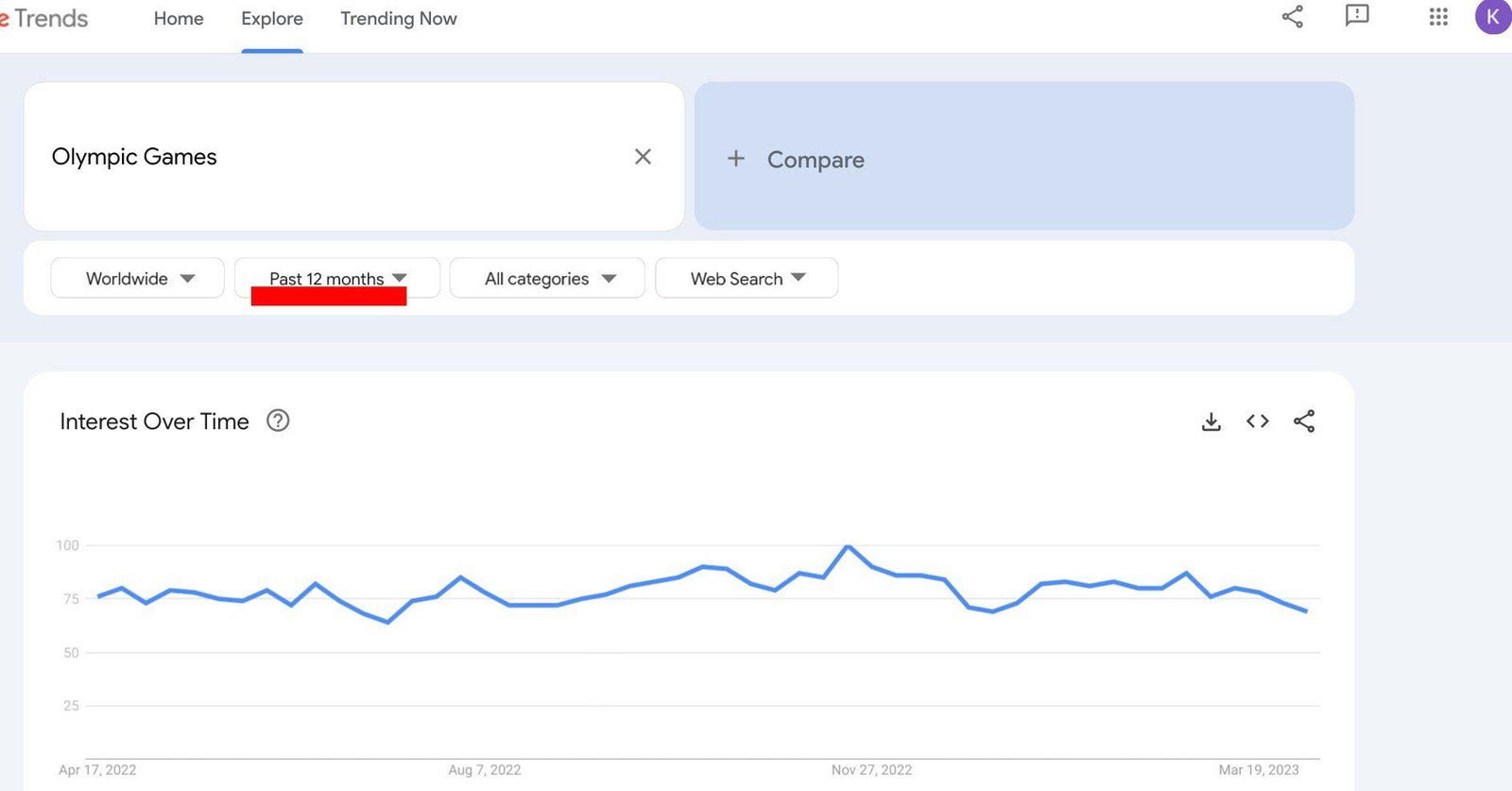
You’ll want to pick blog niches you know can have long-time relevance and success, not just a one-off niche like Covid-19, or a once-in-a-while topic like the World Cup or the Olympics.
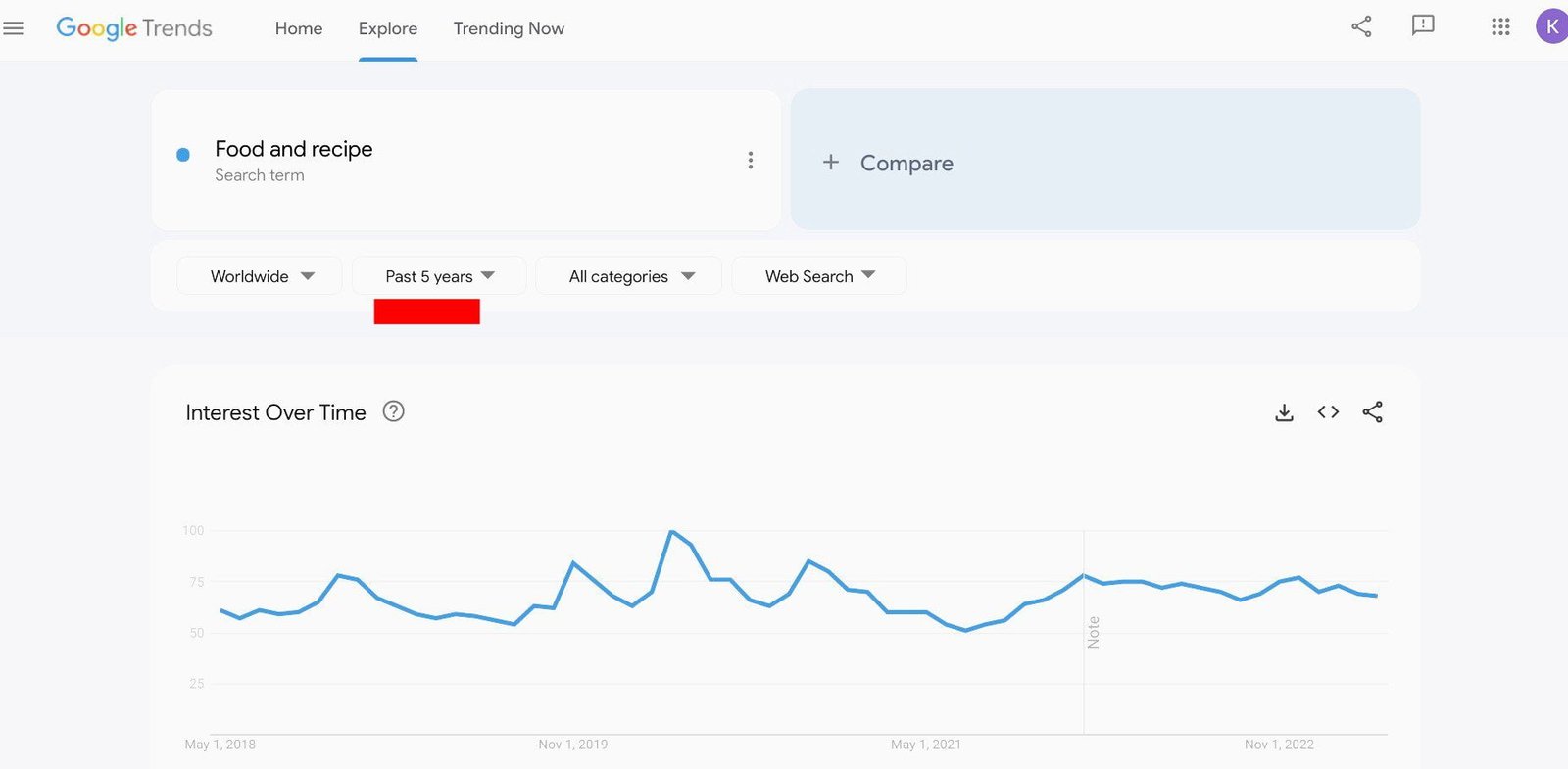
So for sustainability, check how stable the search interest is for longer periods, say the past 5 years.
For our examples, if you check a niche like “Food and recipes”, “Women’s fashion”, or “Men’s fashion”, the search interest has remained pretty stable in the last 5 years.
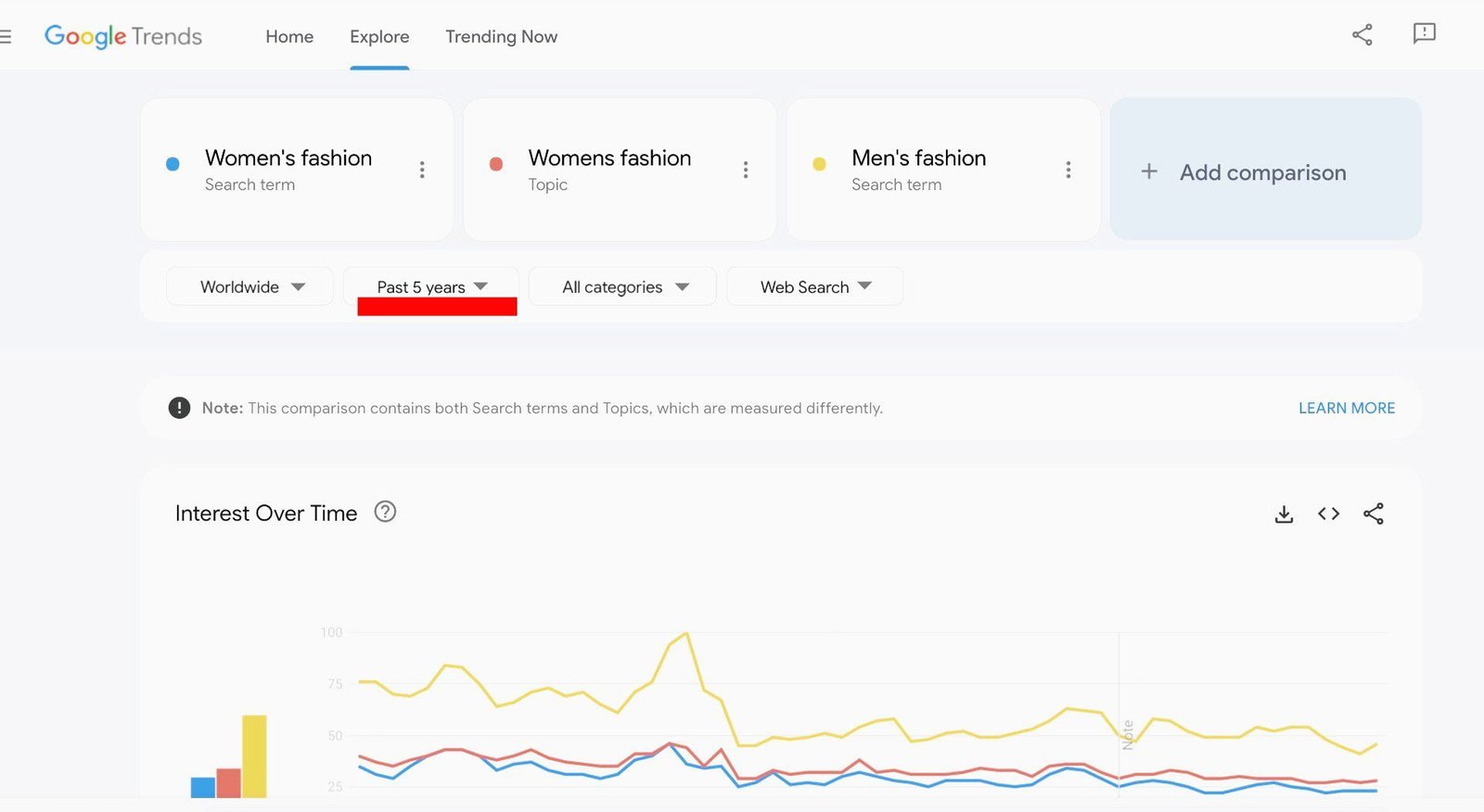
For “Coronavirus”, the search interest is already tapering off after only 3 years.
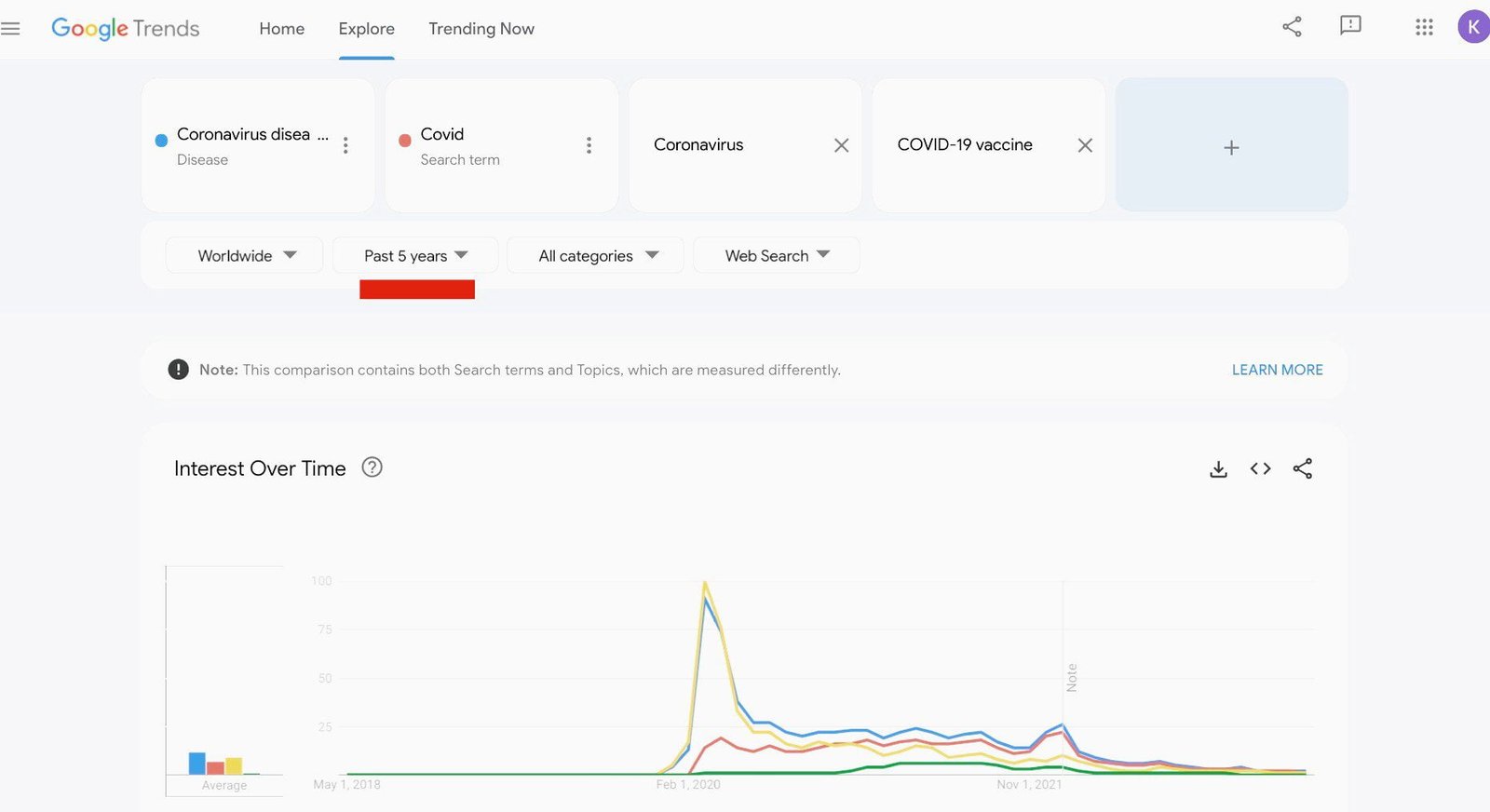
That is a strong signal that starting a website on this topic is not sustainable.
For a topic like the “World Cup”, again, after the euphoria of the games, the world comes back to the earth almost immediately.
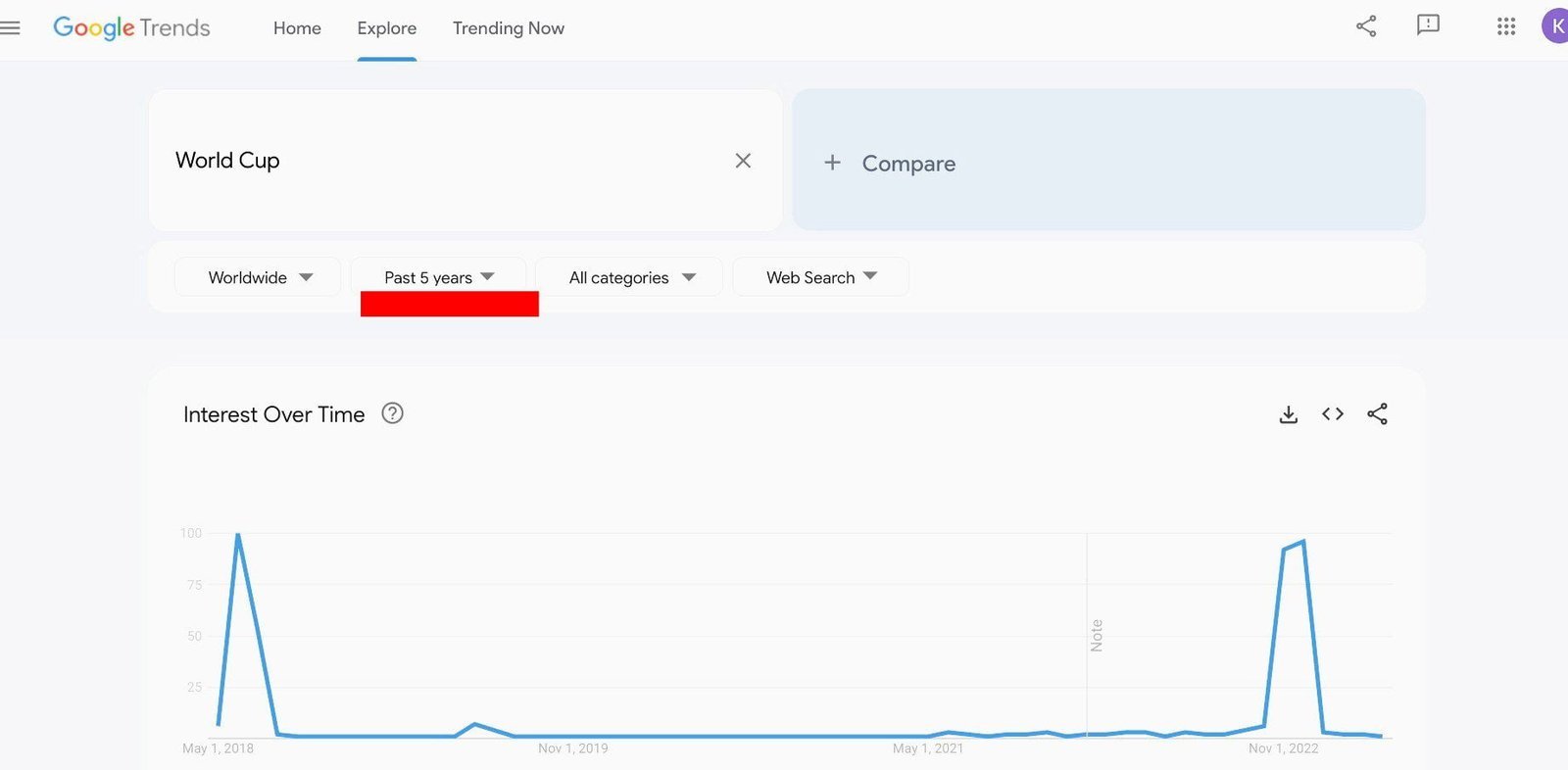
This is a flash-in-the-pan niche.
For the Olympics, the search interest for the past 12 months is quite stable:
However, the story is different when you check for the past 5 years.
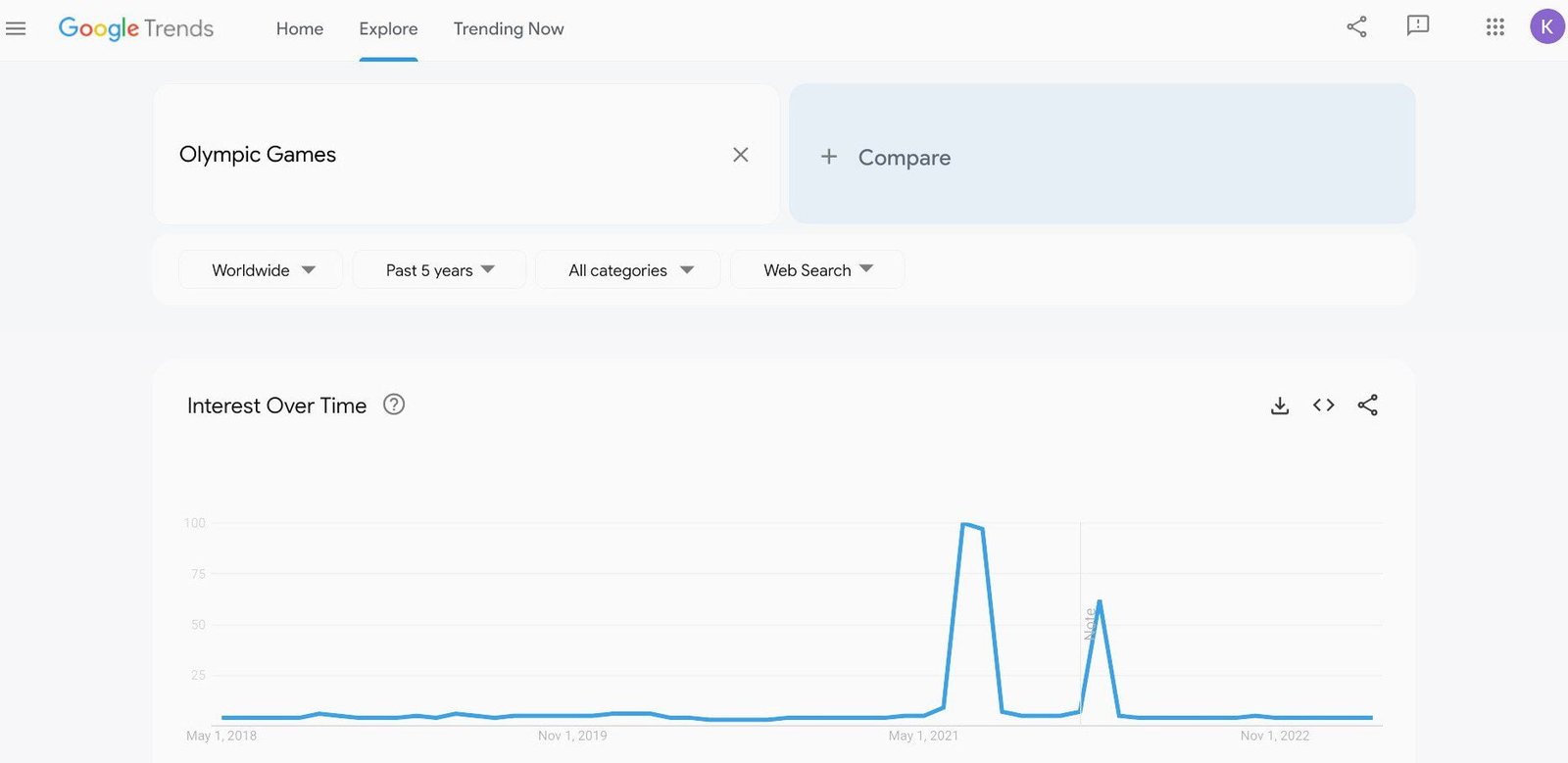
Search interest peaked during the Summer Games in Tokyo, Japan in July 2021, and the Winter Games in Beijing, China in February 2022.
It simply means it is not sustainable.
While for the NBA and the Premier League, search interest dwindles even for longer periods.
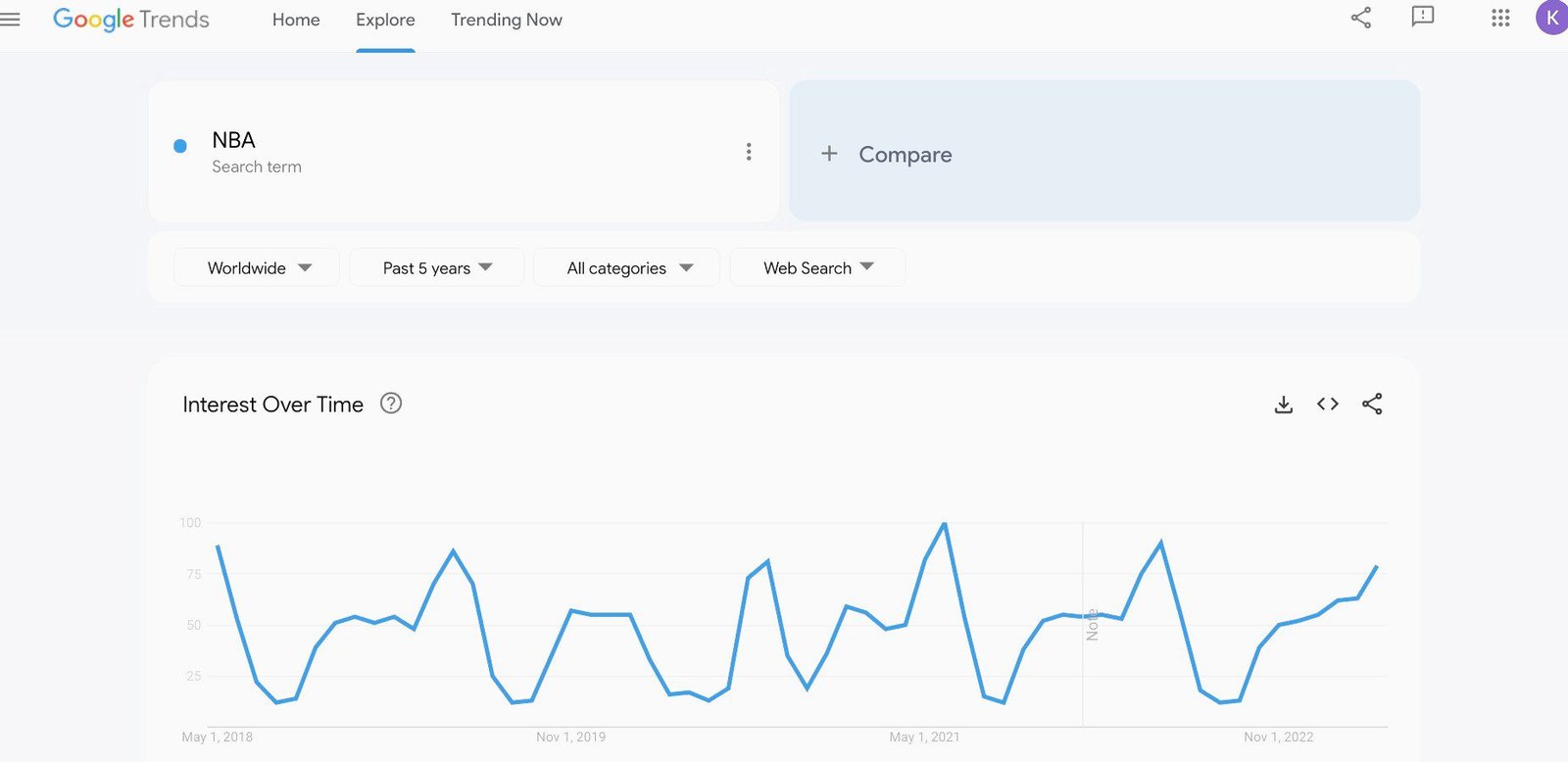
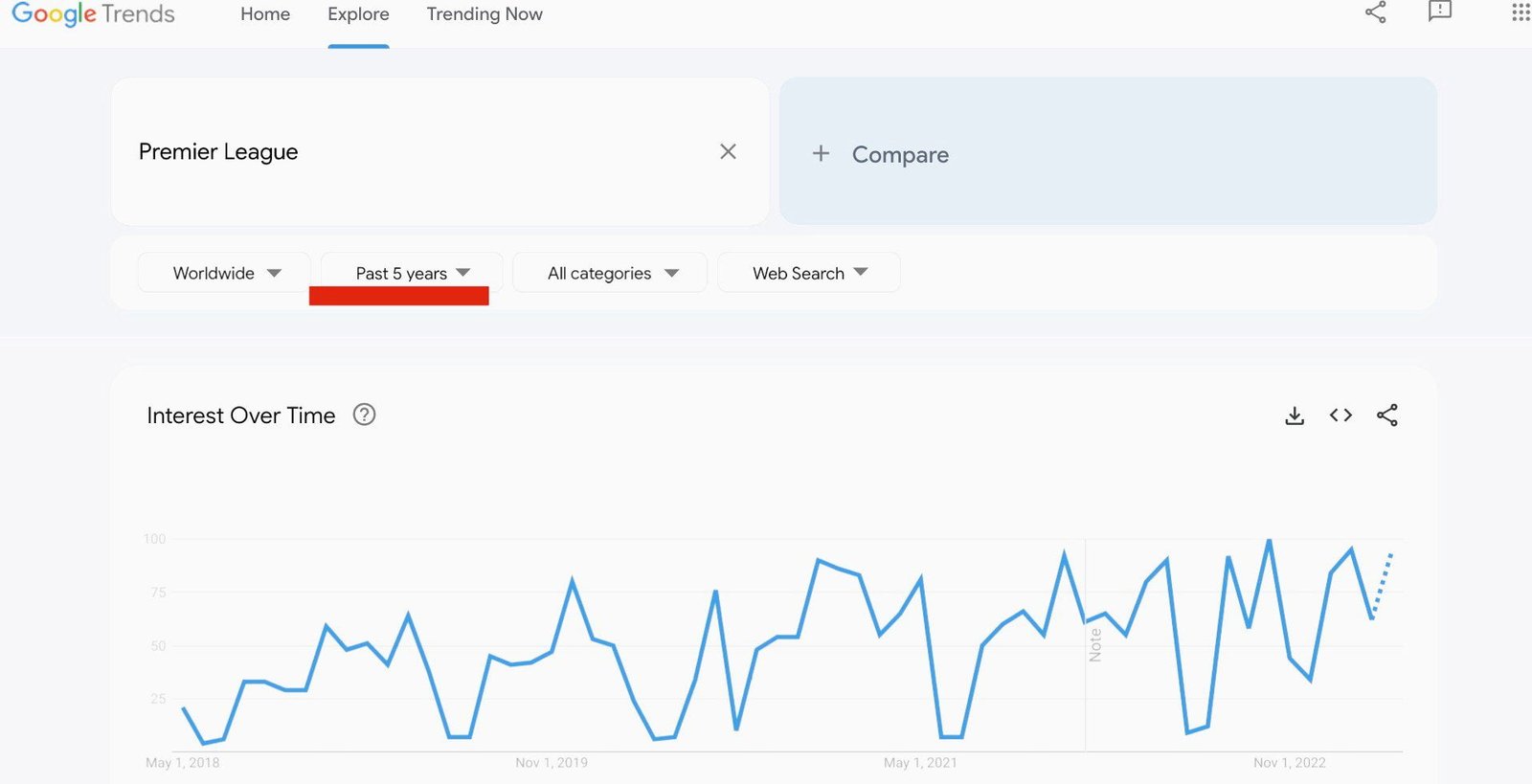
This means that people’s interest in the niches drops for those periods. So you should consider that if you want to blog about such topics.
Therefore, check the trend, and make sure the niche has a stable search interest year-round for a reasonable amount of time.
This is a pointer that the topic has a bright future ahead.
So, choose a topic that attracts a steady web interest over a long period.
❺ Enough profitability
If one of your goals is to make money with your blog, then you’ll want to pick a topic with enough profitability.
Your blog niche should allow different steady income streams such as:
✓ Displaying adverts
✓ Promoting affiliate products and services
✓ Publishing sponsored posts
✓ Selling freelance services
✓ Offering consulting and coaching services
✓ Creating online courses
✓ Writing e-books
✓ Selling physical or digital products
✓ Accepting donations
These are some of the popular ways blogs in virtually all niches use to make money.
However, some monetization strategies are more effective in some niches than others.
Next, you should be able to use several revenue streams at once.
To know how to monetize your site, look at what methods your competitors are using on theirs.
Also, you can research the average income in your niche.
This will give you an idea of what you can earn, all things being equal.
That said, on average across niches, bloggers make a five-figure income yearly.
However, you can earn a lot more if you work hard and fortune smiles on your blog.
So many popular blogs earn six, seven-figure income yearly. A good example is CreateandGo. They usually publish their earnings on their website.
That being said, whatever niche you are in, the following factors can help you improve your chances of making money with your blog:
▪ Quality content
This is the crux of any online business success – creating consistently compelling and relevant content that your audience finds helpful.
It is the most effective way to grow your traffic.
It will not only keep your user base from coming back but also draw in new visitors.
▪ SEO (search engine optimization)
SEO is next to valuable content.
It is the legitimate way of making your content Google-friendly, so it can rank high in search results, where it can attract more relevant readers.
▪ A decent traffic
This factor completely depends on the first two factors – quality content and SEO.
And the more traffic you get, the better your chances of selling your products or services.
▪ The right monetization methods
Using several effective income streams will definitely boost your earnings.
So, use all the strategies that are working well in your niche.
It is important to note that some topics are more profitable than others.
That said, making money shouldn’t be the primary motivation for choosing a blog topic.
The first 4 elements of a profitable niche – enough queries, expertise, passion, and sustainability – all come before profitability in that order.
Once it is profitable enough, and the income streams look good, check off the niche on your list.
All the blog niche ideas where these 5 factors check, have a real prospect of success.
However, you want to pick the niche with the best chance.
Choose the Topic Where You Can Produce the Best Results
At this point, some niches would have risen to the top of your list.
These are the ones you want to narrow down to, to make your final choice.
Again, all of your blog topic ideas that pass the Enough Niche Test have a great chance of success.
That said, using the analogy “all fingers are not equal”, all niche ideas are not equal.
So you’ll want to zero in on the niche that has the highest projections or the highest average of all the 5 factors:
▸ It has the highest number of searchers (and more content ideas). From the keyword research you conducted earlier, which of your topics has the highest volume of searches, and highest content ideas?
▸ It is your best area of expertise. From the list of blog post ideas you wrote earlier, which topic are you most knowledgeable about?
▸ It is your strongest passion. Which topic makes your heart race the most?
▸ It will be the most relevant for a long time. From your research on Google Trends, which niche has the brightest future?
▸ It is where you can possibly make good money. Which niche has the best monetization opportunities, from your findings?
Again, your perfect niche is the topic with the highest projections of all the 5 factors or the highest average.
You can use the other blog topic for future projects.
Some Common Mistakes to Avoid When Choosing Your Blog Niche
1. Choosing a topic that is either too broad or too narrow.
Choosing a topic that is too broad would make you spread yourself too thin that you won’t be able to do justice to it.
In other words, you won’t be able to create in-depth, quality content because you have so many topics to cover under the blog topic.
On the other hand, selecting a topic that is too narrow would mean that you’ll have too little to talk about, and you’ll quickly run out of ideas.
The perfect blog niche allows you to cover enough topics (in terms of number), and enough of each topic (in terms of depth) so that you have enough content to satisfy your audience for a long time.
While every one of your posts cannot be a pillar post, you’ll want to provide a satisfying amount of quality content for each, for the purpose of the page, if you want it to rank in Google.
2. Picking a topic that you haven’t researched.
Getting down to blog about a topic you haven’t properly researched, is going in blind.
People make the mistake of assuming their blog will succeed once they put it out there.
Just because you’re passionate about a topic doesn’t mean many people are too.
While you can start a blog about your passion or experience, first find out how many people are interested in the topic.
3. Trying to Cover different unrelated topics in one blog.
Another common mistake people make is trying to be a jack-of-all-trades in different unrelated niches in one blog.
Even if you have the expertise on these different topics, avoid cramming them into one blog.
For example, creating a single blog for ‘food recipes’ and ‘home remodeling‘.
It confuses search engines and makes it difficult for them to know where to place your website.
Search engines prefer a niche per blog like they do one main keyword per page.
So, rather than cram different topics into one space, create a different blog for each topic, once they pass the ‘Enough’ niche test.
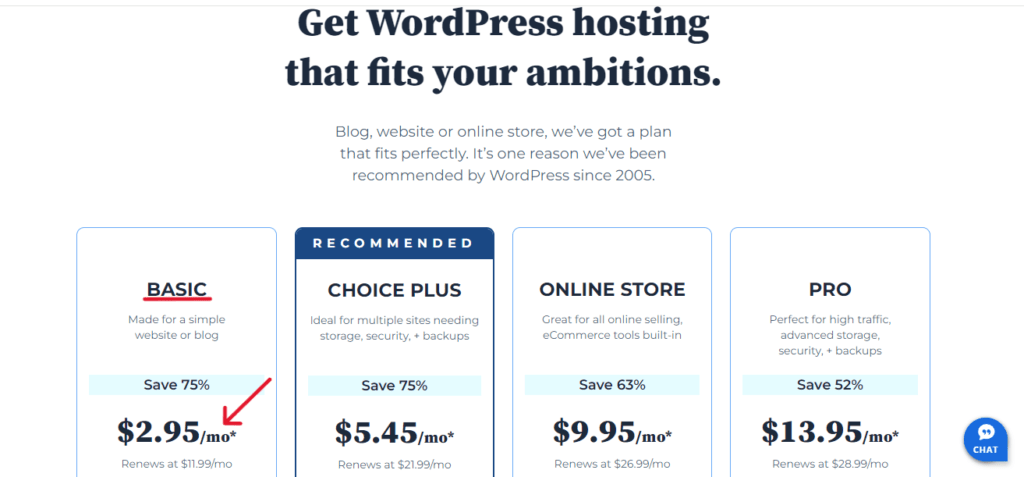
Thankfully, Bluehost’s Shared hosting, or Hostinger’s Premium allows you to start multiple websites with one hosting account.
Better still, you can micro-niche within a niche once you have enough of the 5 factors that make up a profitable niche.
For example, within ‘Microbiology’, there is enough space for ‘Medical microbiology’.
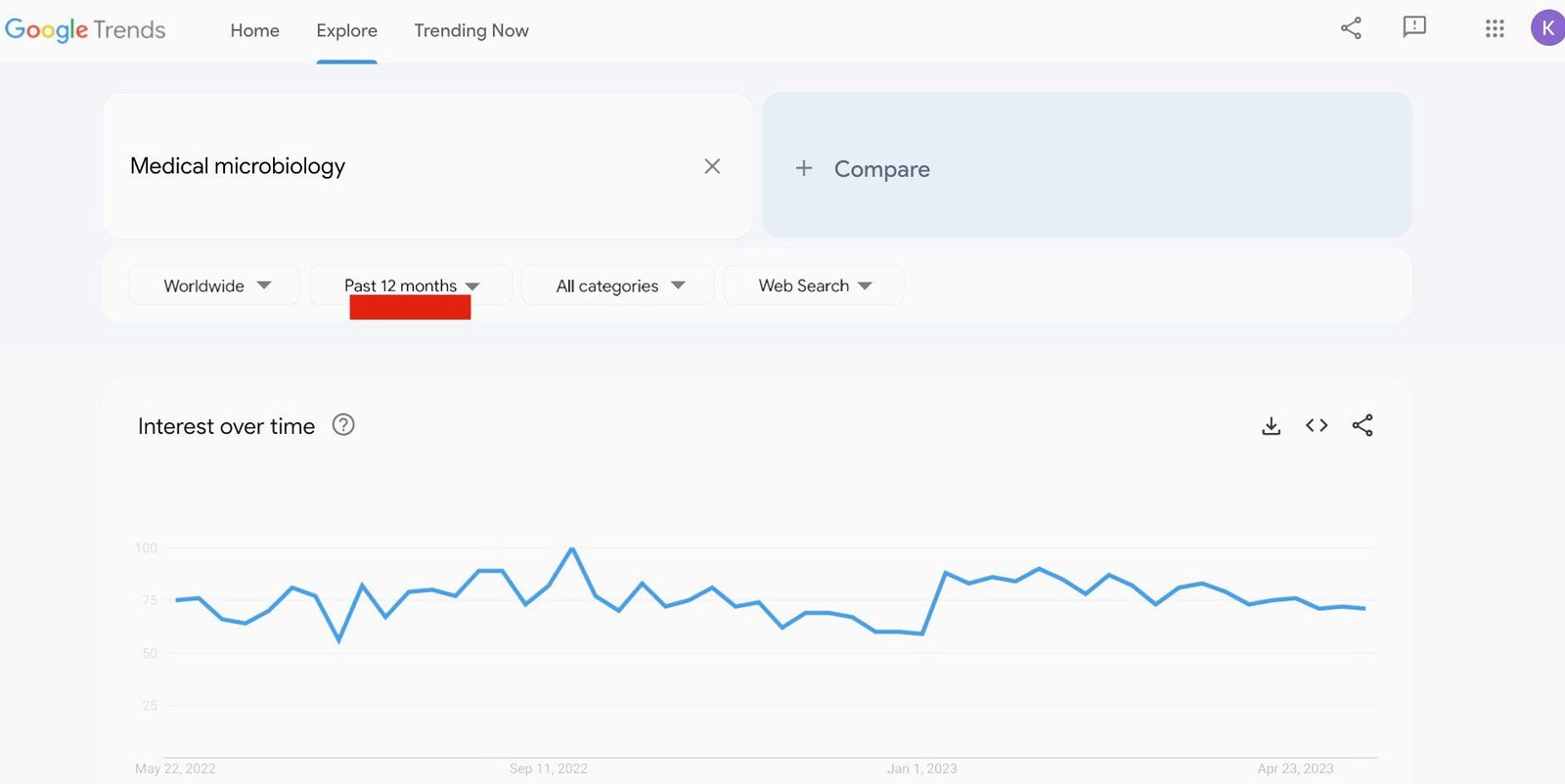
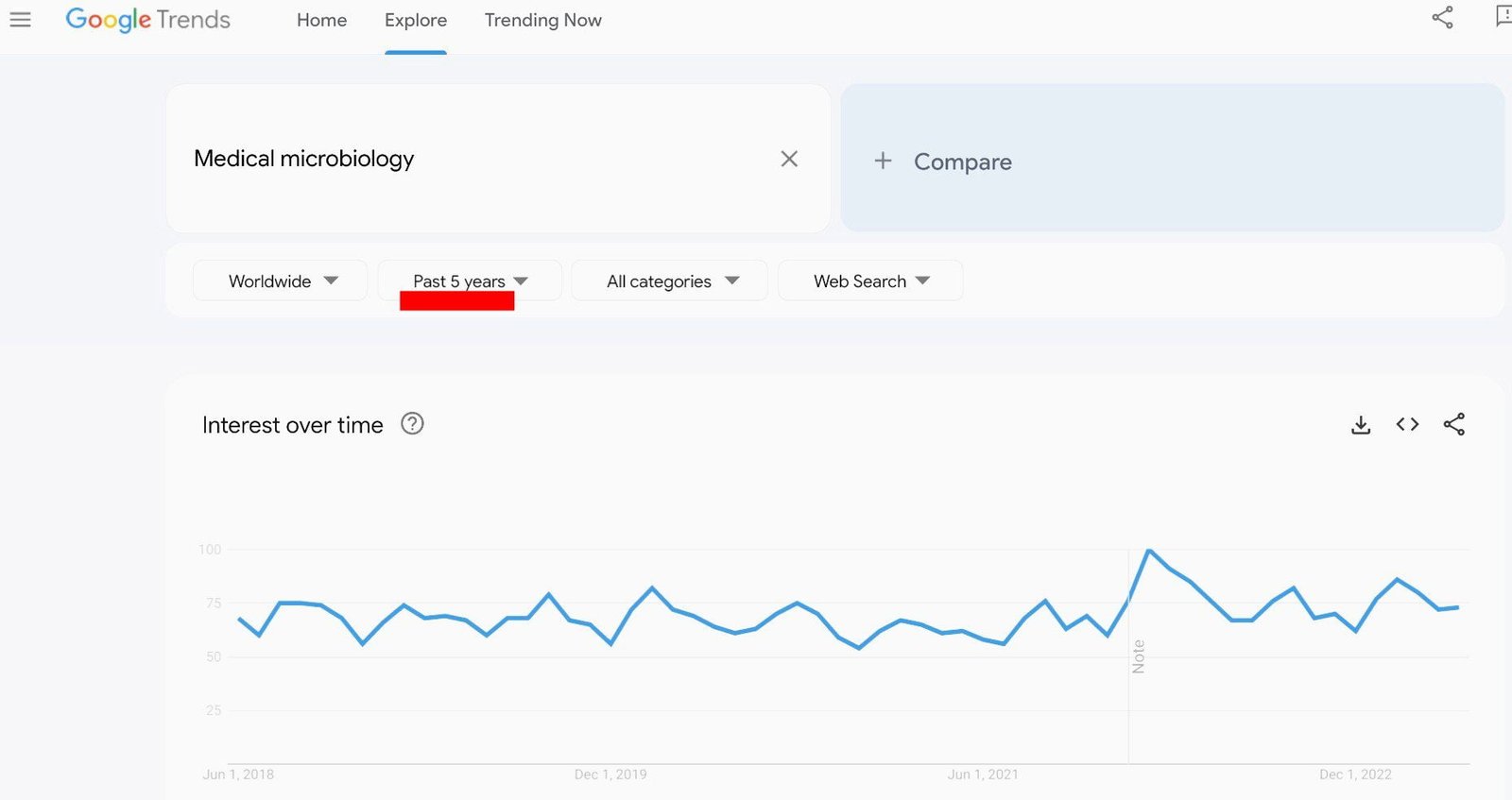
That way, you quickly establish yourself as an authority in that specific area of expertise.
273 Blog Niche Ideas with A Great Chance of Success Today
There are thousands of thriving niches out there. However, you can break a completely new frontier.
According to Google, 15% of billions of search queries people type daily are still brand-new.
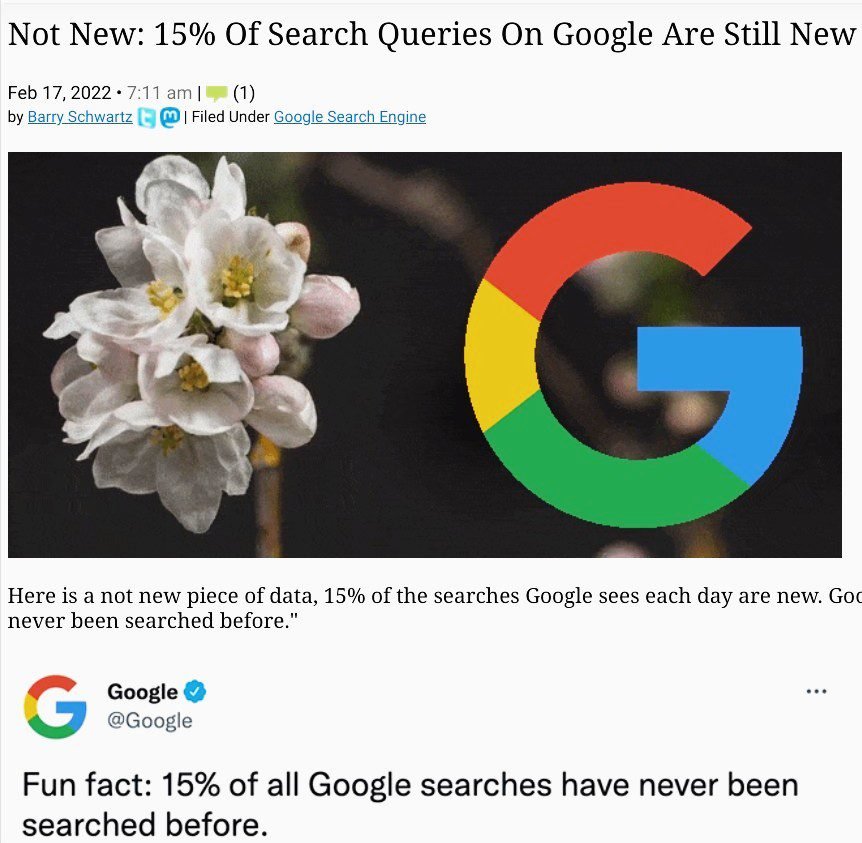
And like I said before, most queries are open-ended questions. So, all the answers to many queries aren’t on the web yet.
Research is the key to finding your perfect niche.
Use the ‘Enough Niche Test’ to verify every idea you find.
With that said, I have taken great pains to research on Google Trends 273 blog niches that are trending and profitable, to ease the challenge of finding your perfect niche.
So, you can begin your search here.
I can confirm that each of these 273 topics has enough search queries, sustainability, and profitability.
Only you can tell which and which you have enough expertise in and enough passion for.
Again, make doubly sure your preferred topic passes the ‘Enough Niche Test’ before you settle down to blog about it.
I have grouped them into YMYL and non-YMYL niches (just as Google has done).
Note: Some of these topics have sizeable micro niches you can specialize in (once the projections for 5 elements of an ideal niche are good enough).
Simply click on any topic to view the search interest worldwide in the last 12 months.
Again, you can check the interest over time for different time frames and regions.
● YMYL Niches
Like I said earlier, YMYL niches require formal education or training, and certifications.
So, if you choose any of these ideas, you want to provide information about your formal expertise in your biographical data on at least your About page.
Important: Again, Google will rate you low if you create a page or blog on any YMYL topic without the appropriate formal expertise.
Because YMYL niches require a very high level of E-E-A-T.
▪ Health Topics
Health blogs are not only visited by other experts and trainees in the medical field but also by patients and caregivers who want to be informed about these health issues.
So, they attract a lot of traffic from different regions of the world year-round.
3. Anatomy
5. Dementia
6. Heart (or Cardiovascular) diseases
7. Child health
10. Healthy eating
12. Eye health
14. Pregnancy
16. Diabetes
17. Exercise
18. Sports medicine
19. Sexual health
20. Weight Loss
21. Depression
22. Cell biology
23. Obesity
24. Hair loss
25. Haematology
26. Physiotherapy
27. Urology
28. Trauma
▪ Finance Topics
Finance niches are some of the most profitable niches on the internet. Across the world, people have money problems, and want to learn from the experts, ways of how to manage and improve their finances.
30. Money management
31. Personal finance
32. Investing
33. Stocks
34. Get out of debt
35. Money savings
36. Retirement
38. Budgeting
39. Family finance
▪ Housing Topics
41. Homerenovations/remodeling
42. Interior design
43. Landscaping
44. Roofing
46. Bathroom remodeling/renovations
47. Tiny house
▪ Science Topics
48. Genetics
50. Ecology
51. Material science
53. Chemistry
54. Etymology
55. Computer Science
56. Geography
57. Architecture
58. Methodology
59. Microbiology
60. Geology
61. Astronomy
62. Biochemistry
63. Zoology
64. Anthropology
65. Physics
66. Nuclear power
67. Food science
68. Archaeology
69. Earth science
▪ Legal Niches
These sites attract many visitors including lawyers, law students, and even laymen.
However, again, legal websites should be created only by qualified legal experts.
71. Maritime law
72. Property law
73. Criminal law
75. Media law
76. Family law
77. Education law
78. Tax law
79. Sports law
80. Labor law
81. Business law
82. Child law
83. Elder law
84. Marriage law
▪ Tax Niches
Different regions have different taxes. You want to check your area to see the various types of taxes.
Below are, however, the common topics that you can write about.
Note: Tax websites and pages should be created by tax experts for better rankings in Google.
86. Corporate tax
87. Property tax
88. Shipping tax
89. Personal tax
90. Income tax
91. Business tax
92. Tax advice
93. Tax management
▪ Relationship Ideas
94. Dating
95. Wedding
96. Marriage
97. Family life
98. Parenting
99. Divorce
100. Family planning
101. New couple
102. Social skills
103. New parents
104. Big family
105. Small family
106. Child adoption
107. Single parent
108. Online dating
▪ Car Niche Ideas
109. Luxury cars
110. Vintage cars
111. Used cars
113. Toyota cars
114. Ford cars
115. BMW cars
117. Car maintenance
118. Car accessories
119. Driving lessons
▪ News and current affairs niches
120. Political news
122. Breaking news
123. Health news
124. Business news
125. Entertainment news
126. Technology news
▪ Tech niches
128. Data science
130, Cybersecurity
131. Robotics
132. Software development
● Non-YMYL Niche Ideas
Again, these topics require less formal education or training.
Your life experience or “everyday expertise” is enough for you to be considered an expert in the field.
However, your content has to be detailed, relevant, and helpful to rank well in search results.
Your site’s reputation will depend on its popularity, user engagement, and reviews.
▪ Fashion Topics
What helps fashion bloggers to stand out is embracing their own unique style, taste, and personality.
They choose a macro niche to project their own views about how a particular group of people can make better choices that fit their body type so that they look better and feel confident.
Here are the popular niches in the fashion industry:
137. Sewing
138. Fashion stylist
▪ Art Niche Ideas
139. Fine art
140. Portraits
141. Wood working
142. Digital art
143. Oil panting
144. Miniatures
145. Manga art
146. Pottery
147. Calligraphy
148. Watercolors
149. Caricatures
150. Sculpture
▪ Photography Niches
Photography is so broad and diverse, so it is best to narrow your focus to a specific area such as:
151. Portrait photography
152. Travel photography
153. Food photography
155. Wildlife photography
156. Product photography
157. Wedding photography
158. Fashion photography
159. Newborn photography
161. Street photography
▪ Beauty Niches
162. Beauty products
163. Hairstyles
164. Makeup
165. Skin care
166. Nail care
167. Beauty salon
168. Hair care
▪ Lifestyle Topics
169. Personal fitness
170. Gift guide
171. Personal development
172. Minimalism
173. College life
174. Homesteading
175. Life hacks
176. Gardening
▪ Business Niches
177. Small and medium-sized enterprises
178. Business financing
179. Entrepreneurship
180. Sales
181. Risk management
182. Customer Support
183. Marketing
184. Events planning
▪ Sports Topics
185. Volleyball
186. Car racing
187. Horse riding
188. Chess
189. Beach volleyball
190. Swimming
191. Water sports
192. Athletes
193. Cycling
194. Basketball
195. Motorcycle racing
196. Tennis
197. Gymnastics
198. Hockey
199. Marathon
200. Surfing
201. Kung fu
203. Boxing
204. Golf
205. Fencing
206. Judo
207. Martial arts
▪ Travel Niches
208. Family travel
209. Group travel
210. Solo travel
211. Holiday travel
212. Medical travel
213. Food travel
214. Road travel
215. Culture travel
216. Jungle travel
217. Overseas travel
218. Boat travel
220. Local travel
▪ Food and Recipes
221. Baking
222. Organic food
223. Restaurant reviews
224. Street food
225. Home cooking
226. Desserts
227. Recipes
228. Healthy food
229. Sea food
230. Wines
231. Cocktails
▪ Agricultural Niches
232. Fish farming
233. Pig farming
234. Poultry farming
▪ Entertainment Niches
235. Song writing
236. Comedy
237. Funny animal videos
238. Films
239. Film festivals
240. Television shows
241. Concerts
242. Music festivals
244. Dance
245. Movie reviews
▪ Musical Instrument Niches
People from different regions want to learn how to play various instruments.
If you have expertise in playing any major instruments, you can start a blog or video blog (aka vlog) about it.
You want to look at what is available online and think of easier and more interesting ways to teach the skills.
246. Piano lessons
247. Guitar lessons
248. Drum lessons
249. Keyboard lessons
250. Sound mixing
▪ Hobbies
251. Jewelry making
252. Camping
253. Gardening
254. Dancing
255. Pet cats
256. Pet care
257. Pet accessories
▪ E-Marketing Niches
258. Search Engine Optimization (SEO)
259. Affiliate marketing
260. Influencer marketing
261. Content marketing
262. Social media marketing (SMM)
263. Email marketing
▪ Web Development Niches
264. Web engineering
265. Web design
266. Content development
269. Network security
▪ Wild Animal Topics
If you have the expertise and passion for wild animals, you could start a blog in any of these niches. The numbers look great. However, you need to do some research.
While you may not be able to compete with the big names like National Geographic which covers virtually every animal, you can carve a niche for yourself in a specialized area such as:
270. Reptiles
271. Big cats
273. Crocodiles
Frequently Asked Questions (FAQs)
▪ What is the most profitable blog niche?
According to Rankiq, the food blog niche has the highest median income of $9,169 monthly, followed by finance topics with $9,100.
The 3rd and 4th places are lifestyle and mommy blog niches earning $5,174 and $5,000 respectively.
Having said that, people are earning good money in every niche.
So long as you have enough queries about the topic and enough money-making channels, you can make money in any niche.
However, there is a high probability of success only if enough of the 5 elements of a profitable niche are present.
Don’t choose a blog topic based on one or even four of the five factors of a profitable niche.
▪ Is choosing a niche necessary in blogging?
Yes, it is. Because every niche is an area of expertise.
Imagine you went into a brick-and-mortar banking hall and saw a hair-dressing salon in one corner and a dental clinic in another.
I’m sure that will leave you confused, and you won’t want to bank with such a bank, because they would come across as unprofessional.
No matter the caliber of financial advice they have and want to give, you may not want to stay to listen.
Same with blogging niches. If a finance blog is also writing about food recipes, and reviews on electronics, that will make readers have a second thought.
Search engines also won’t know where to place such a blog.
Unless you’re running a news blog, specializing in a niche allows you to bring your expertise or experience to bear.
It is part of what Google uses to rank a website. According to them, there are all kinds of “expert” websites.
▪ How do I choose the best blog niche?
Identifying your perfect niche involves a simple but painstaking process.
There are 5 elements every niche should have, and there must be enough of these 5 elements for the niche to be considered profitable.
➀ Enough search queries
➁ Enough expertise
➂ Enough passion
➃ Enough sustainability
➄ Enough profitability
Now, you may have more than one niche that you find all of these factors.
In such a situation, you want to choose the one with the highest of these 5 elements – this is probably your best blog niche.
Conclusion
You’re on home turf when you find your perfect niche. This will start you off on the right foot in your blogging career and business.
It also helps you find your authentic voice that permeates your content and resonates well with people.
Because you’re not only able to write exhaustively about the topic, but you’re also able to offer a unique perspective.
This, in turn, helps your website stand out quickly and strongly from the competition.
Use this guide to select the blog topic you’re best suited for, by doing a thorough search using the Enough Niche Test.
Once you’ve found your perfect niche, the next thing is to brainstorm domain name ideas for your blog.
I have written a comprehensive guide on how to choose the best domain name that you’ll find helpful.
And when you’re done with that process too, you’ll want to see my step-by-step guide on how to start a blog and make money (anywhere).
The only thing that is standing in your way right now is PROCRASTINATION!
Deal with it, and start your blog NOW!
You never can tell, you might just be the next big thing online!
And there you have it – how to choose your best blog niche.
I hope you found this guide useful in learning how to choose the best topic for your blog.
You may also want to see my articles on 27 basic SEO best practices recommended by Google, and how to develop a robust SEO strategy to help you improve your search rankings.
If you like this article, kindly help me spread the word among your friends. Thank you!